

| Distributor | Stock | Pricing | MOQ | PKG | Lead Time | Date Code | On Order Quantity | On Order Delivery | |
|---|---|---|---|---|---|---|---|---|---|
|
5 pcs
|
5 pcs | On Request | 1 | On Request | On Request | On Request | On Request | On Request |
| Category | |
| Manufacturer Name | |
| Clock Frequency | |
| Current | |
| Function | |
| Input Capacitance | |
| Max Propagation Delay @ V, Max CL | |
| Mounting Type | |
| Number of Bits per Element | |
| Number of Elements | |
| Operating Temperature | |
| Output Type | |
| SVHC Present | |
| Supplier Device Package | |
| Supplier Package | |
| Trigger Type | |
| Type | |
| Voltage |
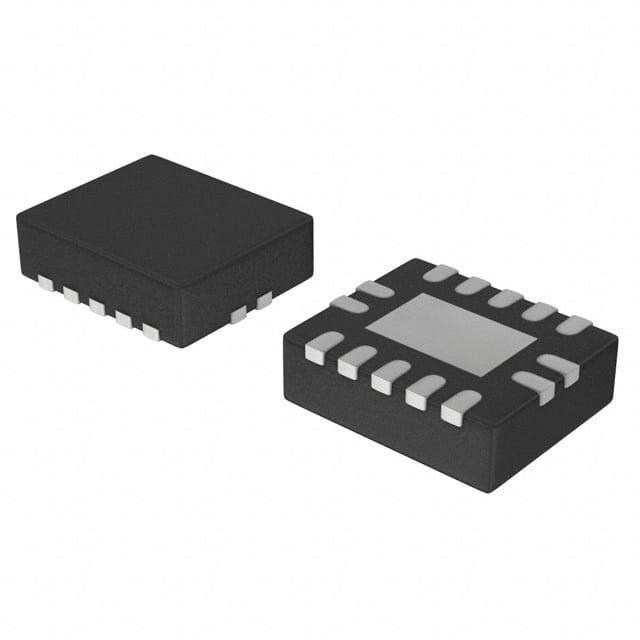
The 74LVC74ABQ,115 is a dual D-type flip-flop integrated circuit from Nexperia. Each flip-flop has independent data, clock, set, and reset inputs, with complementary outputs. The device is triggered on the positive edge of the clock signal.
It operates over a wide supply voltage range of 1.2V to 3.6V, making it suitable for low-voltage applications. The maximum clock frequency is 250 MHz, and the propagation delay is typically 5.2 ns at 3.3V with 50pF load. Quiescent current is only 10 µA, and input capacitance is 4 pF. The inputs are 5V tolerant, allowing interfacing with 5V logic.
The device is housed in a 14-DHVQFN package (2.5x3 mm) with an exposed pad for thermal management. It is surface mount and specified for operation from -40°C to +125°C. ESD protection exceeds 2000V HBM and 1000V CDM.
Typical applications include data storage, frequency division, and control logic in battery-powered devices, industrial controls, and communication systems.
| Qty | Low | High |
|---|---|---|
| 1+ | $1.23 | $1.23 |
Estimated market price range - modelled values for guidance only, not live distributor offers.
The operating voltage range is 1.2V to 3.6V.
It is available in a 14-DHVQFN package (2.5x3 mm) with an exposed pad.
The operating temperature range is -40°C to +125°C.
The trigger type is positive edge.
The maximum clock frequency is 250 MHz.
The maximum propagation delay is 5.2 ns at 3.3V with 50pF load.
Yes, the inputs are 5V tolerant.