

| Distributor | Stock | Pricing | MOQ | PKG | Lead Time | Date Code | On Order Quantity | On Order Delivery | |
|---|---|---|---|---|---|---|---|---|---|
|
1,200 pcs
|
1200 pcs | On Request | 1 | On Request | On Request | 18+22+ | On Request | On Request |
| Category | |
| Manufacturer Name | |
| AEC Qualified | |
| Automotive Grade | |
| Current | |
| Industrial Grade | |
| Input Type | |
| Logic Type | |
| Mounting Type | |
| Number of Bits per Element | |
| Number of Elements | |
| Operating Temperature | |
| Output Type | |
| Supplier Device Package | |
| Supplier Package | |
| Voltage |
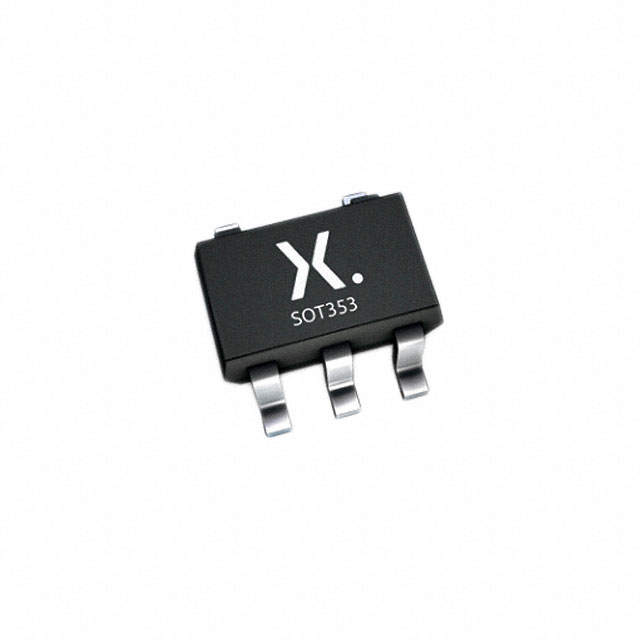
The 74LVC1G17GW-Q100,1 from Nexperia is a single buffer featuring Schmitt trigger inputs, providing high noise immunity. This device is designed for non-inverting logic operations and can interface with both 3.3 V and 5 V systems, making it suitable for mixed-voltage environments.
Key electrical characteristics include a wide supply voltage range from 1.65 V to 5.5 V and an output drive of ±32 mA at 3.0 V. The component is specified for operation across an extended temperature range of -40 °C to +125 °C.
This buffer is qualified for automotive applications according to AEC-Q100 Grade 1 standards. It is available in a compact 5-TSSOP surface-mount package, facilitating integration into various electronic designs. The device also features IOFF circuitry for partial power-down mode operation.
With its robust features, including overvoltage tolerant inputs up to 5.5 V and direct interface with TTL levels, the 74LVC1G17GW-Q100,1 is a versatile component for digital logic applications requiring reliable signal conditioning and buffering.
| Qty | Low | High |
|---|---|---|
| 1+ | $1.20 | $1.20 |
Estimated market price range - modelled values for guidance only, not live distributor offers.
The operating voltage range is 1.65V to 5.5V.
The operating temperature range is -40°C to +125°C.
The device is available in a 5-TSSOP package, also known as SC-70-5 or SOT-353.
Yes, it is AEC-Q100 Grade 1 qualified.
The output drive current is 32mA.
The input is a Schmitt trigger.