

| Distributor | Stock | Pricing | MOQ | PKG | Lead Time | Date Code | On Order Quantity | On Order Delivery | |
|---|---|---|---|---|---|---|---|---|---|
|
55,031 pcs
|
55031 pcs | On Request | 1 | On Request | On Request | On Request | On Request | 2026-02-16 21:33:16 | |
|
19,020 pcs
|
19020 pcs | On Request | 1 | On Request | On Request | On Request | On Request | On Request |
| Category | |
| Manufacturer Name | |
| Current | |
| Features | |
| Input Logic Level | |
| Lead Style | |
| Logic Type | |
| Max Propagation Delay @ V, Max CL | |
| Mounting Type | |
| Number of Circuits | |
| Number of Inputs | |
| Operating Temperature | |
| SVHC Present | |
| Supplier Device Package | |
| Supplier Package | |
| Voltage |
The 74LVC14A is a hex inverter with Schmitt-trigger inputs from Nexperia, designed for applications requiring signal conditioning in noisy environments. Its inputs are tolerant to 5V, allowing seamless integration in mixed 3.3V and 5V systems. This device operates across a wide supply voltage range of 1.2V to 3.6V, offering flexibility in power management.
Key electrical characteristics include a maximum propagation delay of 6.4ns at 3.3V and 50pF, and an output current of 24mA per channel. The inputs support unlimited rise and fall times and are directly compatible with TTL levels. ESD protection is robust, exceeding 2000V for HBM class 2 and 1000V for CDM class C3.
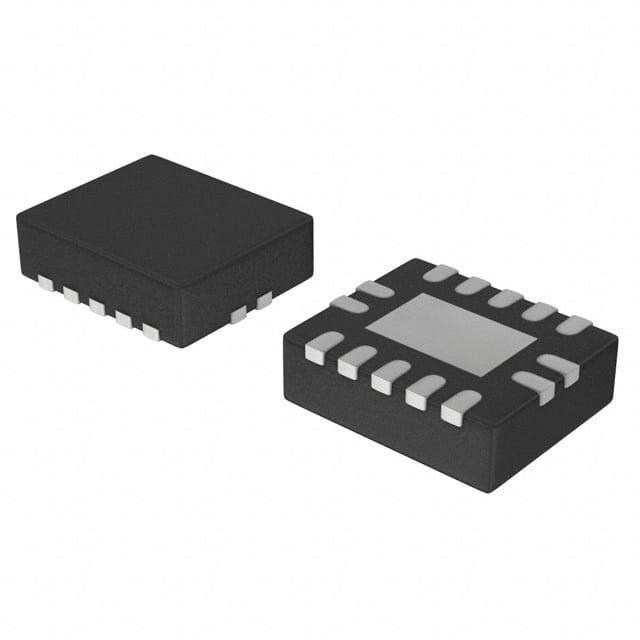
This IC is specified for operation in extended temperature ranges from -40°C to +125°C. It is available in a 14-DHVQFN package with surface mount mounting type. Applications include wave and pulse shaping, and the construction of astable and monostable multivibrators.
| Qty | Low | High |
|---|---|---|
| 1+ | $0.22 | $0.22 |
Estimated market price range - modelled values for guidance only, not live distributor offers.
The supply voltage range is 1.2 V to 3.6 V.
The package is 14-DHVQFN (2.5x3) with exposed pad.
The operating temperature range is -40°C to +125°C.
The maximum propagation delay is 6.4 ns at 3.3V with 50pF load.
Yes, inputs can be driven from 3.3V or 5V devices, up to 5.5V.
ESD protection exceeds 2000V HBM (class 2) and 1000V CDM (class C3).