

| Distributor | Stock | Pricing | MOQ | PKG | Lead Time | Date Code | On Order Quantity | On Order Delivery | |
|---|---|---|---|---|---|---|---|---|---|
|
16,020 pcs
|
16020 pcs | On Request | 1 | On Request | On Request | On Request | On Request | On Request |
| Category | |
| Manufacturer Name | |
| Current | |
| Independent Circuits | |
| Latch-up Performance | |
| Logic Type | |
| Mounting Style | |
| Mounting Type | |
| Operating Temperature | |
| Propagation Delay | |
| Schmitt Trigger Input | |
| Supplier Device Package | |
| Voltage |
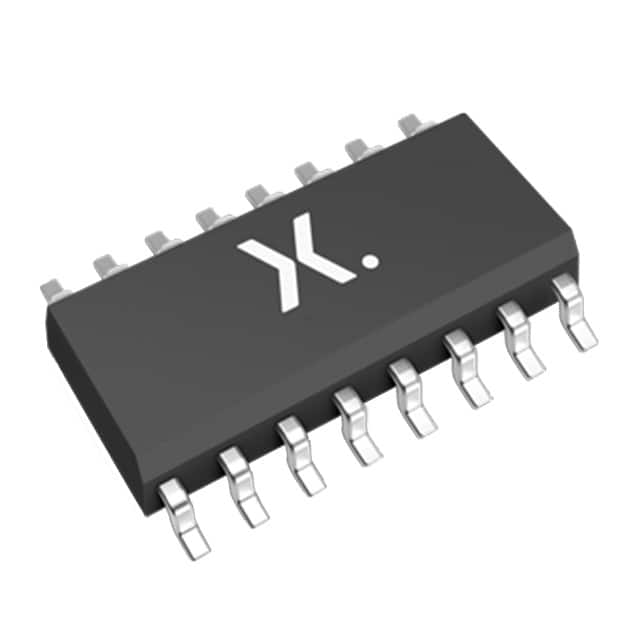
The 74LV123D,118 from Nexperia is a dual retriggerable monostable multivibrator with reset functionality. This integrated circuit is designed for flexibility, allowing the output pulse width to be programmed by external components (REXT and CEXT) and extended through retriggering. The output delay can be terminated at any time via a direct reset input.
Key electrical characteristics include a wide supply voltage range from 1 V to 5.5 V, making it suitable for various low-voltage applications. It offers a typical propagation delay of 14 ns and supports active HIGH or active LOW triggering. The device features Schmitt-trigger action on its inputs (except reset), enhancing tolerance to slower input transitions. It is specified for operation across a temperature range of -40°C to +125°C.
Packaged in a 16-SOIC (0.154", 3.90mm Width) surface-mount package, the 74LV123D,118 is designed for integration into a variety of electronic systems. Its dual-channel design and retriggerable capability allow for the creation of very long output pulses, up to 100% duty factor, by continuous retriggering. The device also includes clamp diodes on its control inputs, enabling the use of current-limiting resistors for interfacing with voltages exceeding VCC.
| Qty | Low | High |
|---|---|---|
| 1+ | $0.50 | $0.50 |
Estimated market price range - modelled values for guidance only, not live distributor offers.
1 V to 5.5 V.
-40°C to +125°C.
16-SOIC (0.154", 3.90mm Width) surface-mount package.
14 ns.
2.
No.
HBM exceeds 2000 V, CDM exceeds 1000 V.