

| Distributor | Stock | Pricing | MOQ | PKG | Lead Time | Date Code | On Order Quantity | On Order Delivery | |
|---|---|---|---|---|---|---|---|---|---|
|
1,531 pcs
|
1531 pcs | On Request | 1 | On Request | On Request | On Request | On Request | On Request | |
|
59 pcs
|
59 pcs | On Request | 1 | On Request | On Request | On Request | On Request | On Request | |
|
50 pcs
|
50 pcs | On Request | 1 | On Request | On Request | On Request | On Request | On Request |
| Category | |
| Manufacturer Name | |
| Clock Frequency | |
| Lead Spacing | |
| Lead Style | |
| Memory Format | |
| Memory Interface | |
| Memory Organization | |
| Memory Size | |
| Memory Type | |
| Mounting Type | |
| Operating Temperature | |
| SVHC Present | |
| Supplier Device Package | |
| Supplier Package | |
| Technology | |
| Voltage | |
| Write Cycle Time |
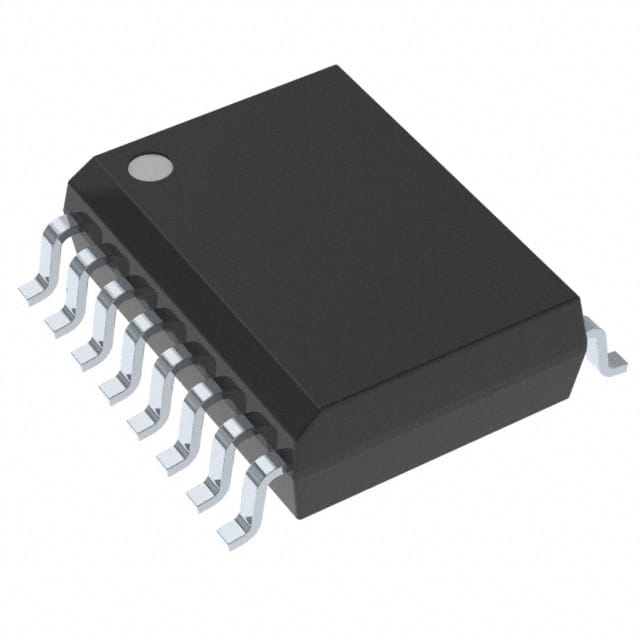
This W25Q256FVFIG is a 256Mbit serial flash memory manufactured by Winbond Electronics. It utilizes NOR flash technology and supports SPI, Dual SPI, Quad SPI, and QPI (Quad Peripheral Interface) operations, enabling high-speed data transfer up to 104 MHz.
The memory operates within a voltage range of 2.7V to 3.6V and is designed for a temperature range of -40°C to 85°C. Its organization is 32M x 8 bits, providing ample storage capacity for various applications.
The device is supplied in a 16-SOIC package with a surface mount type, suitable for integration into compact electronic designs. The package dimensions are 0.295 inches (7.50mm) in width. Write cycle times are specified as 50µs for single-byte writes and 3ms for page writes.
| Qty | Low | High |
|---|---|---|
| 1+ | $1.28 | $1.28 |
Estimated market price range - modelled values for guidance only, not live distributor offers.
The W25Q256FVFIG has a memory size of 256 Mbit.
The operating voltage range is 2.7V to 3.6V.
The operating temperature range is -40°C to +85°C.
The W25Q256FVFIG is available in a 16-SOIC (0.295", 7.50mm Width) surface-mount package.
The maximum clock frequency is 104 MHz.
The W25Q256FVFIG supports SPI, Quad I/O, and QPI interfaces.