

| Distributor | Stock | Pricing | MOQ | PKG | Lead Time | Date Code | On Order Quantity | On Order Delivery | |
|---|---|---|---|---|---|---|---|---|---|
|
2,580 pcs
|
2580 pcs | On Request | 1 | On Request | On Request | On Request | On Request | On Request |
| Category | |
| Manufacturer Name | |
| Current | |
| Delay Time | |
| Input Type | |
| Interface | |
| Mounting Type | |
| Number of Outputs | |
| Operating Temperature | |
| Output Configuration | |
| Output Type | |
| Output Voltage | |
| Ratio | |
| Supplier Device Package | |
| Supplier Package | |
| Switch Type | |
| Switching Voltage | |
| Voltage |
The ULN2003AINSR from Texas Instruments is a high-voltage, high-current Darlington transistor array. It comprises seven NPN Darlington pairs, each equipped with common-cathode clamp diodes suitable for switching inductive loads. The device offers 50V high-voltage outputs and a collector current rating of 500mA per single Darlington pair.
This array is designed for direct compatibility with TTL or 5V CMOS devices, featuring a 2.7kΩ series base resistor for each Darlington pair. The inputs are compatible with various logic types, and the output configuration is low-side.
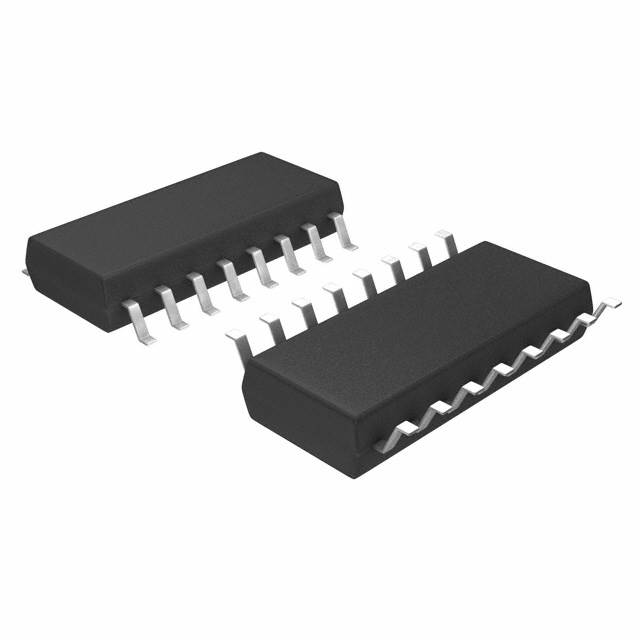
The ULN2003AINSR is available in a 16-SOIC surface mount package. Its operating temperature range is -40°C to 105°C (TA). Applications include relay drivers, hammer drivers, lamp drivers, and display drivers.
Key electrical characteristics include a switching voltage of up to 50V, a peak output current of 0.5A, and a typical delay time of 250ns. The typical voltage at the lowest specified current is 900mV, with a typical output current off of 50µA.
| Qty | Low | High |
|---|---|---|
| 1+ | $0.27 | $0.27 |
Estimated market price range - modelled values for guidance only, not live distributor offers.
The maximum switching voltage is 50V.
The peak output current is 0.5A.
The operating temperature range is -40°C to 105°C.
It comes in a 16-SOIC (0.209", 5.30mm Width) surface-mount package.
The inputs are compatible with CMOS and TTL logic levels.
The typical delay time is 250ns.