

| Distributor | Stock | Pricing | MOQ | PKG | Lead Time | Date Code | On Order Quantity | On Order Delivery | |
|---|---|---|---|---|---|---|---|---|---|
|
3,000 pcs
|
3000 pcs | On Request | 1 | On Request | On Request | On Request | On Request | On Request |
| Category | |
| Manufacturer Name | |
| Applications | |
| Halogen Free | |
| Interface | |
| Lead Spacing | |
| Mounting Type | |
| Supplier Device Package | |
| Voltage |
The UJA1076A is a high-speed CAN core System Basis Chip (SBC) from NXP Semiconductors, designed to replace discrete components in Electronic Control Units (ECUs). It features a high-speed CAN transceiver compatible with ISO 11898-2:2003 and ISO 11898-5:2006 standards.
This SBC integrates several key functions including a scalable 3.3V or 5V voltage regulator for microcontrollers (up to 250 mA, extendable with an external PNP transistor), a separate voltage regulator for the CAN transceiver, an advanced independent watchdog, and a full-duplex Serial Peripheral Interface (SPI).
Designed for automotive applications, the UJA1076A offers enhanced ElectroMagnetic Compatibility (EMC) performance, ±8 kV ESD protection on CAN bus and wake-up pins (HBM), ±6 kV ESD protection (IEC 61000-4-2), and ±58 V short-circuit proof CAN bus pins. It also supports remote flash programming via the CAN bus.
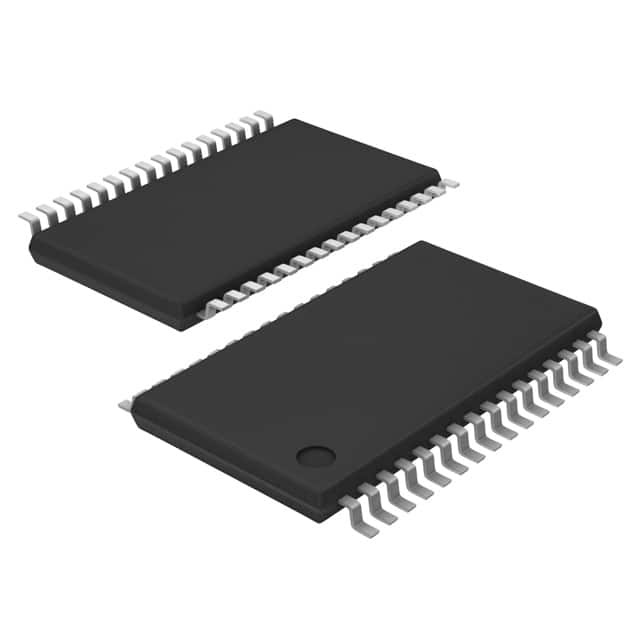
The component is supplied in a compact 6.1 mm × 11 mm HTSSOP32 package with a surface mount type. It is Pb-free and dark green compliant, indicating RoHS and halogen-free status.
| Qty | Low | High |
|---|---|---|
| 1+ | $6.39 | $6.39 |
Estimated market price range - modelled values for guidance only, not live distributor offers.
The operating voltage range is 4.5 V to 28 V.
The UJA1076ATW/5V0WD,1 is supplied in a 32-HTSSOP package, also described as 32-TSSOP (0.240", 6.10mm Width) Exposed Pad.
The RoHS status is RoHS3 Compliant.
The Moisture Sensitivity Level (MSL) is 1.
The UJA1076ATW/5V0WD,1 uses an SPI serial interface.
The UJA1076ATW/5V0WD,1 features a high-speed CAN transceiver compatible with ISO 11898-2:2003 and ISO 11898-5:2006 standards.