

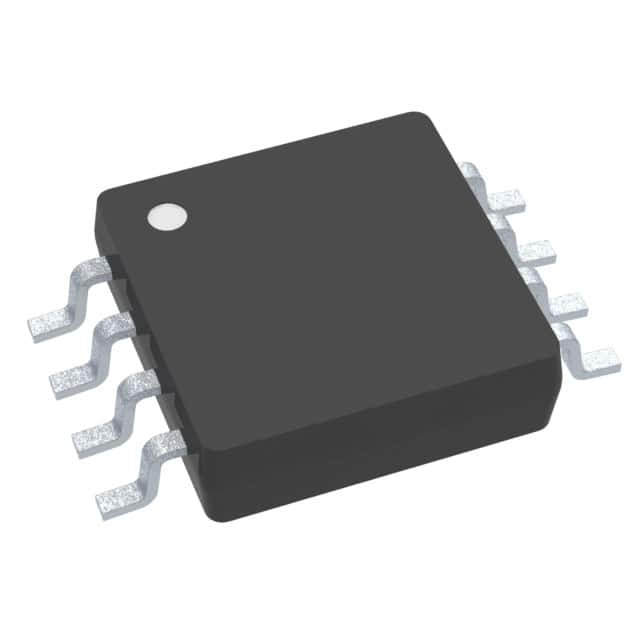
| Distributor | Stock | Pricing | MOQ | PKG | Lead Time | Date Code | On Order Quantity | On Order Delivery | |
|---|---|---|---|---|---|---|---|---|---|
|
1,597 pcs
|
1597 pcs | On Request | 1 | On Request | On Request | On Request | On Request | On Request |
| Category | |
| Manufacturer Name | |
| Clock Sync | |
| Control Features | |
| Duty Cycle (Max) | |
| Features | |
| Frequency | |
| Function | |
| Industrial Grade | |
| Mounting Type | |
| Number of Outputs | |
| Operating Temperature | |
| Output Configuration | |
| Output Phases | |
| Output Type | |
| SVHC Present | |
| Supplier Device Package | |
| Supplier Package | |
| Synchronous Rectifier | |
| Topology | |
| Voltage |
The Texas Instruments UCC28C44DGK is a high-performance, low-power current-mode Pulse Width Modulation (PWM) controller. It is designed for applications requiring efficient power conversion, supporting topologies such as Boost, Buck, Flyback, and Forward converters.
Key electrical specifications include an operating voltage range of 9V to 18V, a maximum frequency of 1MHz, and a maximum duty cycle of 48%. The device offers fast, cycle-by-cycle overcurrent limiting with a response time of 35ns and provides a peak driving current of ±1A. It also features a precise 2.5V error amplifier reference with ±1% accuracy.
This controller is housed in an 8-VSSOP package, suitable for surface mounting. The operating temperature range is -40°C to 105°C (TJ). It is an enhanced replacement for the UCx84x and UCx84xA families, offering improved performance and lower operating current.
The UCC28C44DGK is suitable for a wide range of industrial power supply designs where efficient and reliable control is essential.
| Qty | Low | High |
|---|---|---|
| 1+ | $1.48 | $1.48 |
Estimated market price range - modelled values for guidance only, not live distributor offers.
The operating voltage range is 9V to 18V.
The maximum operating temperature is 105°C.
The maximum duty cycle is 48%.
It is supplied in an 8-VSSOP package.
It supports Boost, Buck, Flyback, Forward, and SEPIC topologies.