

| Distributor | Stock | Pricing | MOQ | PKG | Lead Time | Date Code | On Order Quantity | On Order Delivery | |
|---|---|---|---|---|---|---|---|---|---|
|
9,516 pcs
|
9516 pcs | On Request | 1 | On Request | On Request | On Request | On Request | On Request | |
|
6,358 pcs
|
6358 pcs | On Request | 1 | On Request | On Request | On Request | On Request | On Request |
| Category | |
| Manufacturer Name | |
| Control Features | |
| Duty Cycle | |
| Fault Protection | |
| Frequency | |
| Mounting Type | |
| Operating Temperature | |
| Operating Voltage | |
| Output Isolation | |
| Supplier Device Package | |
| Tape & Reel | |
| Topology | |
| Voltage |
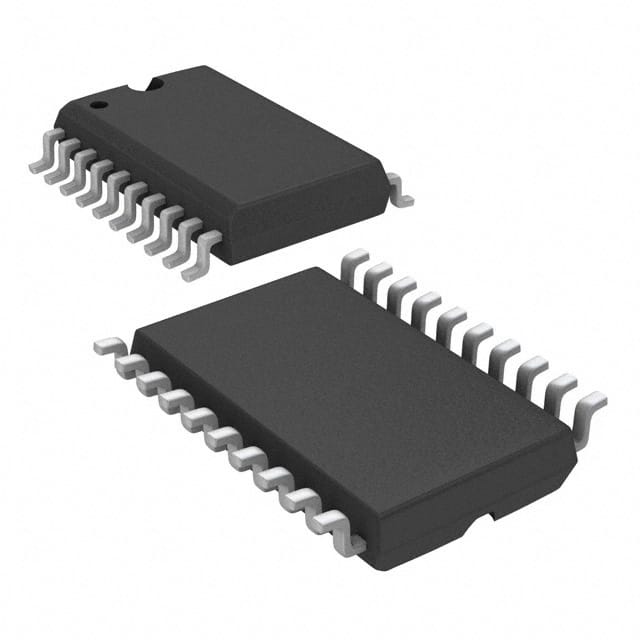
The UC2879DWTR from Texas Instruments is an enhanced bipolar phase shifted full bridge controller. It is designed to control a bridge power stage by phase shifting the switching of one half-bridge with respect to the other, enabling constant frequency pulse width modulation combined with resonant, zero-voltage switching for high efficiency.
This controller is compatible with voltage mode or current mode topologies and offers practical operation at switching frequencies up to 300 kHz. Key features include a 10-MHz error amplifier, pin-programmable undervoltage lockout, and soft start control. The device operates over a temperature range of -40°C to 85°C.
The UC2879DWTR is housed in a 20-SOIC package and is suitable for surface mount applications. It supports a duty cycle of 50% and includes fault protection features such as current limiting. The non-isolated output and control features like frequency control and sync make it a versatile component for power management designs.
This controller is not recommended for new designs.
| Qty | Low | High |
|---|---|---|
| 1+ | $6.99 | $6.99 |
Estimated market price range - modelled values for guidance only, not live distributor offers.
The operating voltage range is 9.25V to 20V.
It comes in a 20-SOIC (0.295", 7.50mm Width) surface mount package.
-40°C to 85°C (TA).
300 kHz.
50%.
Current limiting.
Frequency control, soft start, and synchronization.