

| Distributor | Stock | Pricing | MOQ | PKG | Lead Time | Date Code | On Order Quantity | On Order Delivery | |
|---|---|---|---|---|---|---|---|---|---|
|
12 pcs
|
12 pcs | On Request | 1 | On Request | On Request | On Request | On Request | On Request |
| Category | |
| Manufacturer Name | |
| Channel Type | |
| Current | |
| Driven Configuration | |
| Gate Type | |
| Input Type | |
| Lead Style | |
| Logic Voltage | |
| Mounting Type | |
| Number of Drivers | |
| Operating Temperature | |
| Propagation Delay | |
| Rise | |
| Supplier Device Package | |
| Supplier Package | |
| Voltage |
The UC2706N from Texas Instruments is a versatile dual-channel gate driver suitable for driving N-Channel MOSFETs and IGBTs. It provides 1.5A of peak output current per channel, enabling efficient switching.
This device operates over a wide input supply voltage range of 5V to 40V, offering flexibility in various power applications. Key electrical characteristics include a propagation delay of 0.1µs, with rise and fall times of 40ns and 30ns respectively, facilitating high-speed switching.
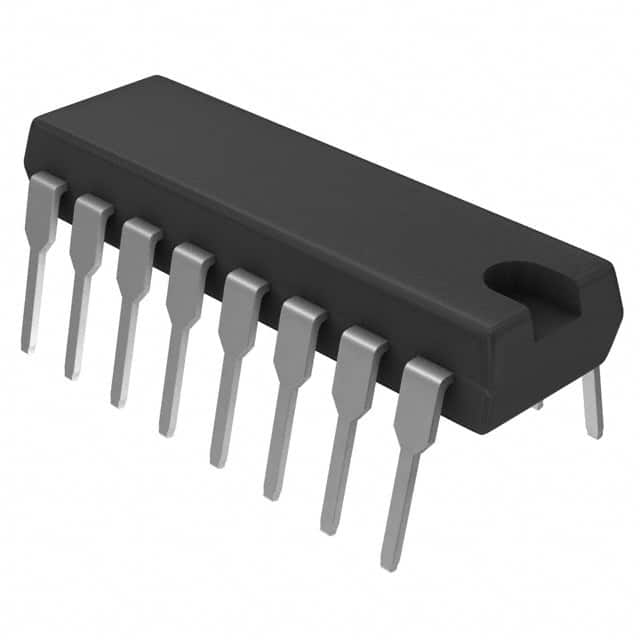
The UC2706N supports both inverting and non-inverting input logic, allowing for flexible control. It is housed in a 16-PDIP package and is designed for through-hole mounting, making it suitable for traditional PCB designs.
Features such as analog shutdown with latch and an inhibit circuit provide enhanced control and protection capabilities. The operating temperature range is -25°C to 85°C (TA).
| Qty | Low | High |
|---|---|---|
| 1+ | $6.22 | $6.22 |
Estimated market price range - modelled values for guidance only, not live distributor offers.
The supply voltage range is 5V to 40V.
The UC2706N is available in a 16-DIP (0.300", 7.62mm) through-hole package, also referred to as 16-PDIP.
The operating temperature range is -25°C to 85°C.
The peak output current is 1.5A per channel.
The UC2706N has two independent driver channels.
The typical rise time is 30ns and fall time is 40ns.
The UC2706N accepts both inverting and non-inverting TTL input signals.