

| Distributor | Stock | Pricing | MOQ | PKG | Lead Time | Date Code | On Order Quantity | On Order Delivery | |
|---|---|---|---|---|---|---|---|---|---|
|
200,000 pcs
|
200000 pcs | On Request | 1 | On Request | On Request | On Request | On Request | On Request |
| Category | |
| Manufacturer Name | |
| Channel Type | |
| Channels per Circuit | |
| Data Rate | |
| Features | |
| Mounting Type | |
| Number of Circuits | |
| Operating Temperature | |
| Output Type | |
| Propagation Delay | |
| SVHC Present | |
| Supplier Device Package | |
| Translator Type | |
| Voltage |
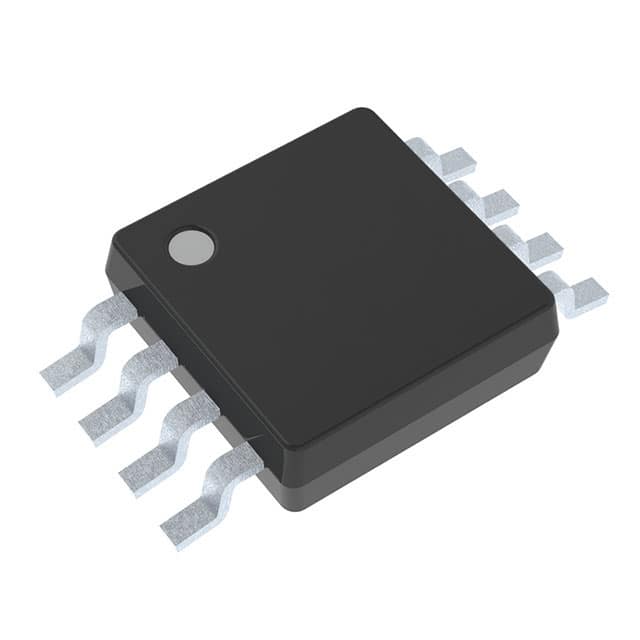
The TXS0102DCUTG4 from Texas Instruments is a 2-bit bidirectional voltage-level translator. This device is suitable for applications requiring translation between different voltage domains, specifically supporting open-drain and push-pull signal types.
Key electrical specifications include an input voltage range of 1.65V to 3.6V and an output voltage range of 2.3V to 5.5V. It offers a maximum data rate of 24Mbps for push-pull operation and 2Mbps for open-drain. The translator features auto-direction sensing, eliminating the need for a direction-control signal, along with edge rate acceleration, output enable, partial power down (Ioff), and VCC isolation.
Designed for flexibility, the TXS0102DCUTG4 operates across a temperature range of -40°C to 85°C. It is available in an 8-VSSOP package, suitable for surface mounting. The device ensures no power-supply sequencing is required, as either VCCA or VCCB can be ramped first, and VCC isolation ensures both ports are in a high-impedance state if either VCC input is at GND.
| Qty | Low | High |
|---|---|---|
| 1+ | $0.12 | $0.12 |
Estimated market price range - modelled values for guidance only, not live distributor offers.
The input range is 1.65V to 3.6V, and the output range is 2.3V to 5.5V.
The maximum data rate is 24Mbps.
It has 2 channels.
The operating temperature range is -40°C to 85°C.
It is available in an 8-VSSOP surface-mount package.
It supports open-drain and push-pull outputs.
Yes, it features auto-direction sensing.