

| Distributor | Stock | Pricing | MOQ | PKG | Lead Time | Date Code | On Order Quantity | On Order Delivery | |
|---|---|---|---|---|---|---|---|---|---|
|
3,413 pcs
|
3413 pcs | On Request | 1 | On Request | On Request | 21+ | On Request | On Request |
| Category | |
| Manufacturer Name | |
| Current | |
| Input Type | |
| Interface | |
| Mounting Type | |
| Operating Temperature | |
| Output Type | |
| Supplier Device Package | |
| Tape & Reel | |
| Type |
The TUSS4470TRTJR is a highly integrated analog front-end (AFE) designed for ultrasonic sensor applications. It offers direct drive capability for transducers and includes a receiver stage with analog output. Key electrical specifications include a gain range of 19 to 113 dB and an 86 dB input dynamic range. The device features a configurable bandpass filter from 40 kHz to 500 kHz and supports transducer frequencies from 40 kHz to 1 MHz.
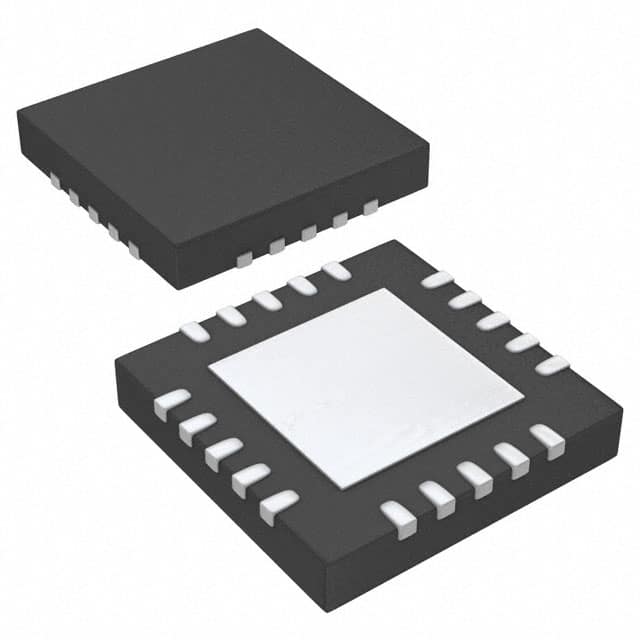
The TUSS4470TRTJR operates within a temperature range of -25°C to 105°C and communicates via an SPI interface. It is available in a 20-QFN (4x4) package, suitable for surface mounting. The IC includes features like a configurable drive stage, supporting direct drive or pre-driver configurations for external FETs, and configurable burst patterns.
This ultrasonic sensor AFE is designed for applications requiring precise distance measurement and object detection. Its integrated driver and receiver stage simplify system design, while low power consumption in standby (1.7 mA typical) and sleep (220 µA typical) modes make it suitable for power-sensitive applications.
| Qty | Low | High |
|---|---|---|
| 1+ | $1.63 | $1.63 |
Estimated market price range - modelled values for guidance only, not live distributor offers.
The operating temperature range is -25°C to 105°C.
The TUSS4470TRTJR uses an SPI interface.
The gain range is from 19 dB to 113 dB.
The configurable bandpass filter ranges from 40 kHz to 500 kHz.
It supports transducer frequencies from 40 kHz to 1 MHz, controlled by an external clock.
The typical standby current consumption is 1.7 mA.
The typical sleep current consumption is 220 µA.