

| Distributor | Stock | Pricing | MOQ | PKG | Lead Time | Date Code | On Order Quantity | On Order Delivery | |
|---|---|---|---|---|---|---|---|---|---|
|
2,100 pcs
|
2100 pcs | On Request | 1 | On Request | On Request | 18+ | On Request | On Request |
| Category | |
| Manufacturer Name | |
| Amplifier Type | |
| Lead Spacing | |
| Lead Style | |
| Mounting Type | |
| Number of Circuits | |
| Operating Temperature | |
| Output Type | |
| Package / Case | |
| SVHC Present | |
| Slew Rate | |
| Storage Temperature | |
| Supplier Device Package | |
| Tape & Reel |
The TS464CDT from STMicroelectronics is a versatile general purpose operational amplifier designed for a wide range of applications. This device integrates four independent amplifier circuits within a single package, offering design flexibility and space savings.
Key electrical characteristics include a gain bandwidth product of 12 MHz and a slew rate of 4V/µs, making it suitable for moderate-speed signal processing. The input offset voltage is a low 1 mV, and the input bias current is 200 nA. The amplifier operates over a wide supply voltage range, from a minimum of 2.7V to a maximum of 10V, with a typical supply current of 2mA per channel.
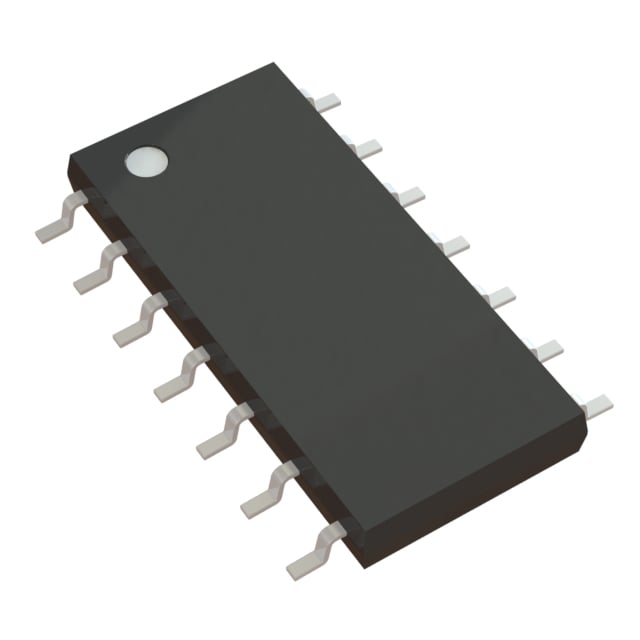
The TS464CDT features a rail-to-rail output stage, which maximizes the output voltage swing and is beneficial in low-voltage applications. It is housed in a 14-SOIC package and designed for surface mounting. The operating temperature range is from -20°C to 70°C.
This operational amplifier is a component within the Integrated Circuits (ICs) category, specifically under Amplifiers. Its general-purpose nature makes it suitable for various analog signal conditioning tasks in electronic designs.
The gain bandwidth product of the TS464CDT is 12 MHz.
The TS464CDT operates with a supply voltage span from 2.7V to 10V.
The slew rate of the TS464CDT is 4V/µs.
The input offset voltage for the TS464CDT is 1 mV.
The TS464CDT is available in a 14-SOIC package.
The TS464CDT operates within a temperature range of -20°C to 70°C.
Common causes of failure include overvoltage, overheating, incorrect pin connections, electrostatic discharge (ESD), and insufficient power supply decoupling.