

| Distributor | Stock | Pricing | MOQ | PKG | Lead Time | Date Code | On Order Quantity | On Order Delivery | |
|---|---|---|---|---|---|---|---|---|---|
|
105,545 pcs
|
105545 pcs | On Request | 1 | On Request | On Request | 1644+5 | On Request | On Request | |
|
238 pcs
|
238 pcs | On Request | 1 | On Request | On Request | 14+ | On Request | On Request |
| Category | |
| Manufacturer Name | |
| Applications | |
| Features | |
| Lead Spacing | |
| Mounting Type | |
| Multiplexer | |
| Number of Channels | |
| On | |
| Operating Temperature | |
| Supplier Device Package | |
| Supplier Package | |
| Supply Voltage | |
| Switch Circuit | |
| Tape & Reel | |
| Voltage |
The TS3A225EYFFR from Texas Instruments is an active analog switch with special purpose applications, particularly in audio headset systems. It operates within a supply voltage range of 2.7V to 4.5V and offers a low on-resistance of 70mΩ for WCSP packages and 100mΩ for QFN packages.
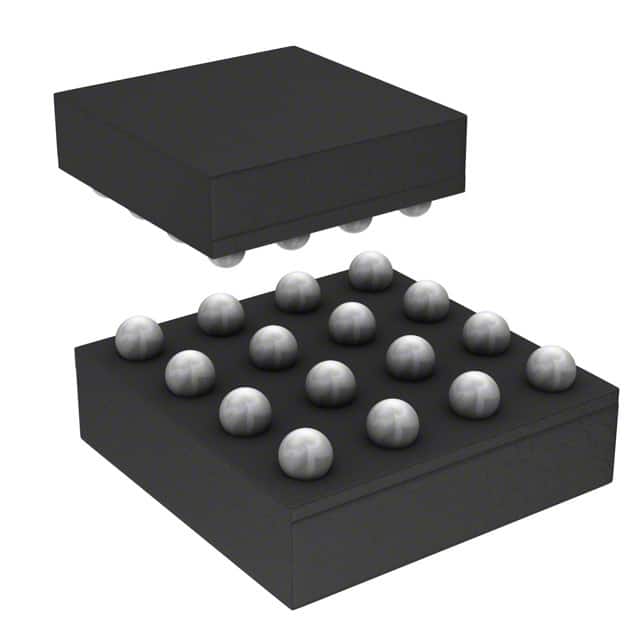
This device supports features like Break-Before-Make and I²C control, enabling autonomous detection of microphone and ground connections. It is housed in a compact 16-DSBGA (YFF) package, measuring 1.56x1.56mm, and is designed for surface mounting. The operating temperature range is -40°C to 85°C.
Key specifications include 2 channels and an SPDT switch configuration. The TS3A225EYFFR is suitable for applications requiring detection functionalities. It also provides robust ESD performance, tested up to 2000V HBM and 8kV contact discharge.
| Qty | Low | High |
|---|---|---|
| 1+ | $0.36 | $0.36 |
Estimated market price range - modelled values for guidance only, not live distributor offers.
The supply voltage range is 2.7 V to 4.5 V.
The typical on-resistance is 70 mOhm for WCSP packages and 100 mOhm for QFN packages.
The operating temperature range is -40°C to 85°C.
It is available in a 16-DSBGA (YFF) package, measuring 1.56x1.56mm, designed for surface mounting.
Yes, the TS3A225EYFFR supports I2C switch control.
Key features include autonomous microphone and ground detection, Break-Before-Make switching, I2C control, and a low on-resistance.