

| Distributor | Stock | Pricing | MOQ | PKG | Lead Time | Date Code | On Order Quantity | On Order Delivery | |
|---|---|---|---|---|---|---|---|---|---|
|
7,000 pcs
|
7000 pcs | On Request | 1 | On Request | On Request | 15+ | On Request | On Request |
| Category | |
| Manufacturer Name | |
| AEC Qualified | |
| Automotive Grade | |
| Control Features | |
| Current | |
| Mounting Type | |
| Noise | |
| Number of Regulators | |
| Operating Temperature | |
| Output Configuration | |
| Output Current | |
| Output Type | |
| PSRR | |
| Protection Features | |
| SVHC Present | |
| Supplier Device Package | |
| Voltage |
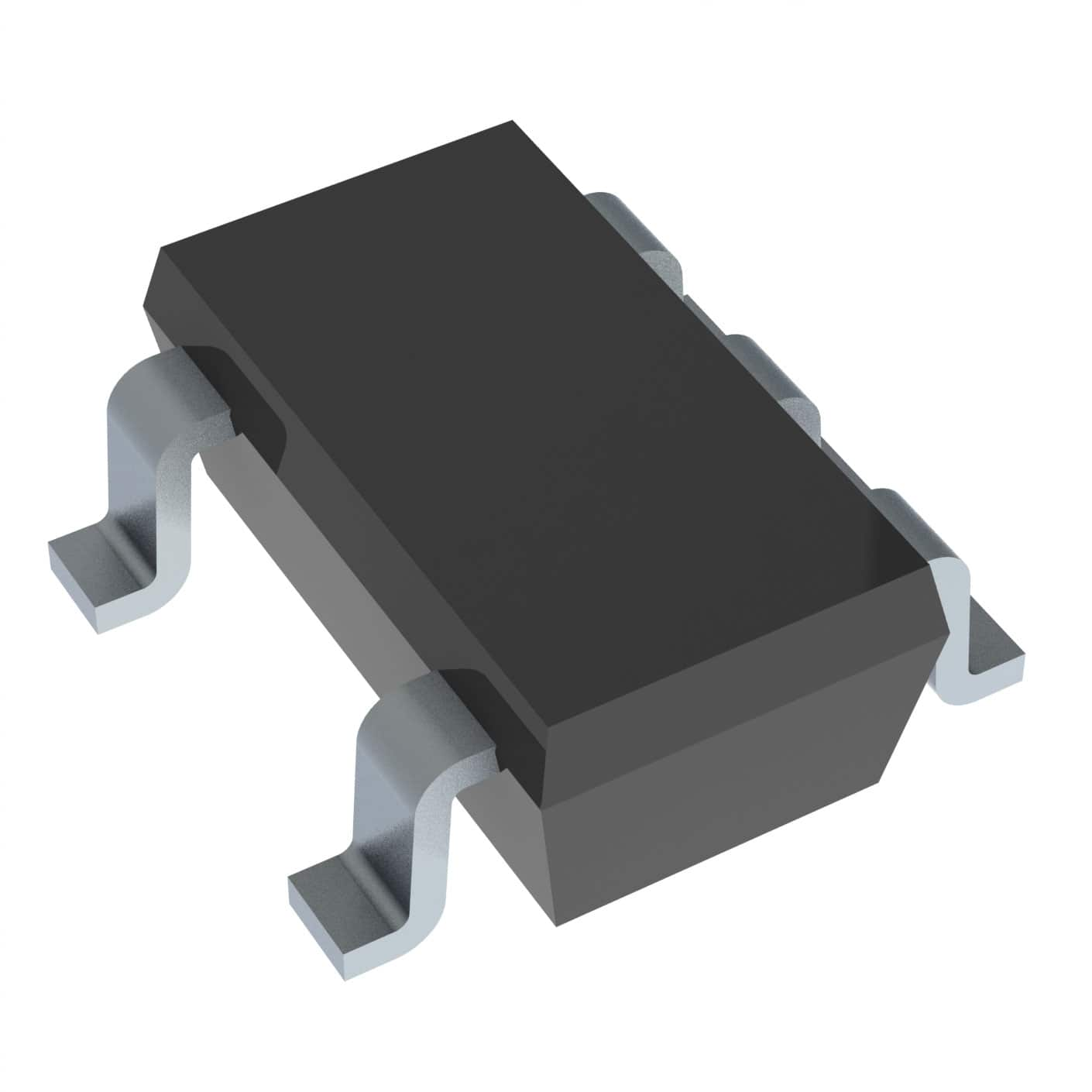
The Texas Instruments TPS76901QDBVRG4Q1 is an automotive-qualified, 100mA low-dropout linear voltage regulator. It features an adjustable output voltage range and is available in a compact SOT-23-5 package, making it suitable for space-constrained designs.
This regulator operates within an input voltage range of 2.7V to 10V (legacy chip) or 2.5V to 16V (new chip), with an absolute maximum of 13.5V or 18V respectively. The output voltage can be adjusted from 1.25V to 5.5V (legacy) or 1.2V to 5.5V (new chip). It provides a typical quiescent current of 0.017mA and features an enable control input.
Key electrical characteristics include a typical dropout voltage of 71mV at 100mA (legacy) or 150mV (new chip), and a PSRR of 28dB at 100kHz. The device includes integrated protection features such as overcurrent and over-temperature shutdown. The operating temperature range is -40°C to 125°C.
Designed for surface mounting, the TPS76901QDBVRG4Q1 is AEC-Q100 qualified for automotive applications. It requires a minimum load capacitance of 4.7µF for legacy chips and 2.2µF for new chips to ensure stable operation.
| Qty | Low | High |
|---|---|---|
| 1+ | $0.54 | $0.54 |
Estimated market price range - modelled values for guidance only, not live distributor offers.
The maximum output current is 0.1A.
The output voltage can be adjusted from 1.2V to 5.5V.
The typical quiescent current is 0.017mA.
The operating temperature range is -40°C to 125°C.
Protection features include Over Current, Over Temperature, and Reverse Polarity.