

| Distributor | Stock | Pricing | MOQ | PKG | Lead Time | Date Code | On Order Quantity | On Order Delivery | |
|---|---|---|---|---|---|---|---|---|---|
|
7,490 pcs
|
7490 pcs | On Request | 1 | On Request | On Request | 19+ | On Request | On Request | |
|
1,790 pcs
|
1790 pcs | On Request | 1 | On Request | On Request | On Request | On Request | On Request |
| Category | |
| Manufacturer Name | |
| Control Features | |
| Current | |
| Mounting Type | |
| Noise | |
| Number of Regulators | |
| Operating Temperature | |
| Output Configuration | |
| Output Current | |
| Output Type | |
| PSRR | |
| Protection Features | |
| Supplier Device Package | |
| Thermal Resistance | |
| Voltage | |
| Voltage Dropout (Max) |
The Texas Instruments TPS73250DBVR is a high-accuracy, ultra-low-dropout linear voltage regulator designed for portable and battery-powered equipment. It utilizes an NMOS topology, providing stable operation with or without an output capacitor and offering excellent load transient response.
This regulator operates with an input voltage range of 1.7V to 5.5V and delivers a fixed 5V output at up to 250mA. Key electrical characteristics include a typical dropout voltage of 40mV at 250mA, low noise of 30µVRMS (10kHz to 100kHz), and high PSRR of 32dB at 100kHz. It also features thermal shutdown and current limit protection for enhanced reliability.
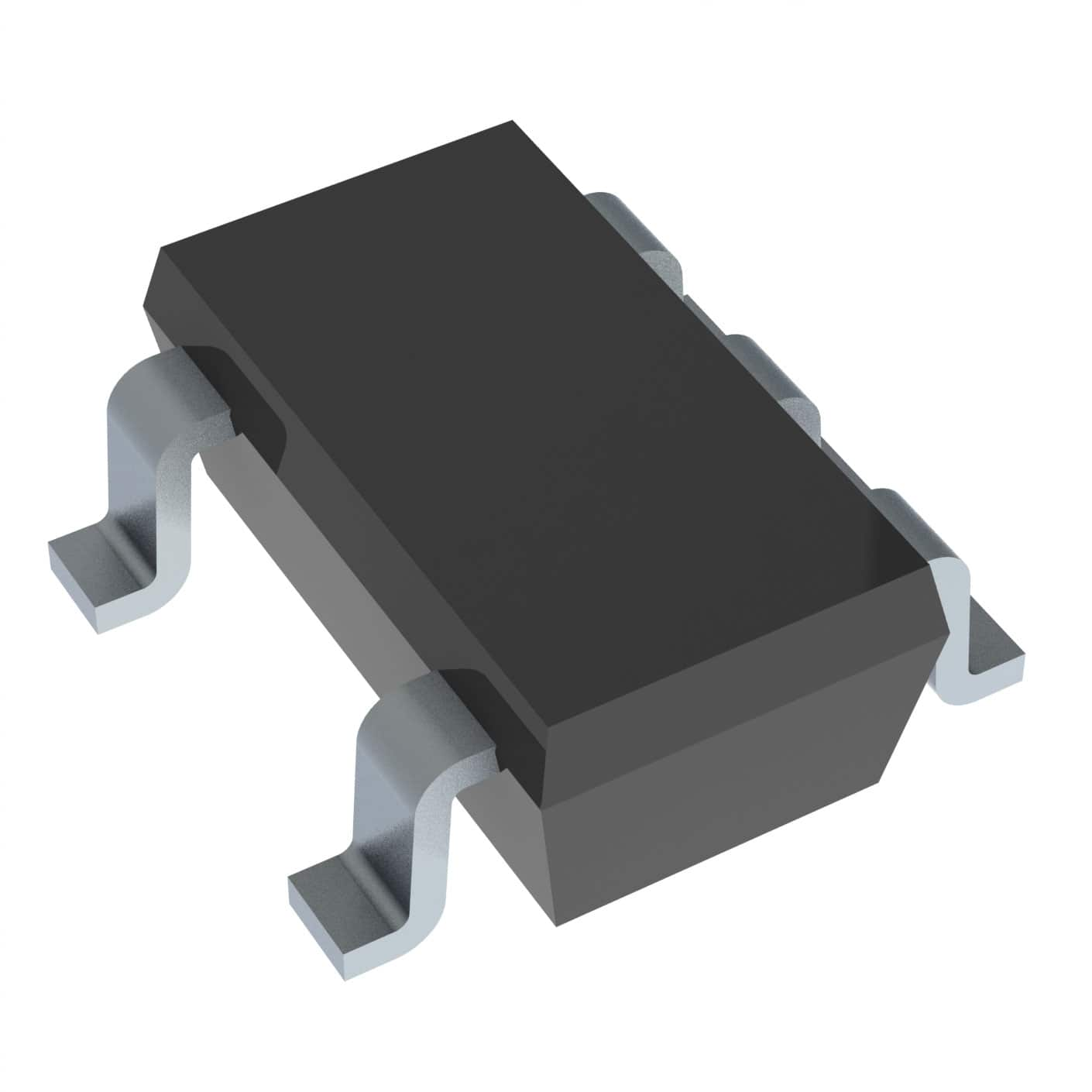
The TPS73250DBVR is supplied in a SOT-23-5 package, suitable for surface mounting. Its low quiescent current, less than 1µA in shutdown mode, makes it ideal for power-sensitive applications. The device is also designed for noise-sensitive circuitry such as VCOs and point-of-load regulation for DSPs, FPGAs, and microprocessors.
| Qty | Low | High |
|---|---|---|
| 1+ | $0.28 | $0.28 |
Estimated market price range - modelled values for guidance only, not live distributor offers.
1.7V to 5.5V.
SOT-23-5 (also available as SC-74A, SOT-753).
-40°C to 125°C.
Typical 40mV at 250mA load, maximum 150mV.
Typical 0.4mA in enable mode, less than 1µA in shutdown.
250mA.
Over-current, over-temperature, short-circuit, and reverse polarity protection.