

| Distributor | Stock | Pricing | MOQ | PKG | Lead Time | Date Code | On Order Quantity | On Order Delivery | |
|---|---|---|---|---|---|---|---|---|---|
|
60,267 pcs
|
60267 pcs | On Request | 1 | On Request | On Request | On Request | On Request | On Request | |
|
36,002 pcs
|
36002 pcs | On Request | 1 | On Request | On Request | 12+ | On Request | On Request | |
|
2,610 pcs
|
2610 pcs | On Request | 1 | On Request | On Request | 1131+ | On Request | On Request | |
|
980 pcs
|
980 pcs | On Request | 1 | On Request | On Request | 09+ | On Request | On Request |
| Category | |
| Manufacturer Name | |
| Current | |
| Efficiency | |
| Frequency | |
| Function | |
| Mounting Type | |
| Number of Outputs | |
| Operating Temperature | |
| Operating Voltage | |
| Output Configuration | |
| Output Type | |
| Output Voltage | |
| Quiescent Current | |
| Supplier Device Package | |
| Synchronous Rectifier | |
| Topology | |
| Voltage |
The Texas Instruments TPS63010YFFR is a highly efficient DC/DC switching regulator designed for power supply solutions. This buck-boost converter features a single inductor design and 2A switches, achieving up to 96% efficiency.
Key electrical specifications include an input voltage range of 2V to 5.5V and adjustable output voltage options from 1.2V to 5.5V. In step-down mode, it can deliver up to 1200mA output current at 3.3V (VIN = 3.6V to 5.5V), and in boost mode, up to 800mA output current at 3.3V (VIN > 2.4V). The device operates at a frequency of 2.4MHz and has a quiescent current of less than 50µA.
This converter supports automatic transition between step-down and boost modes, power save mode for improved efficiency at low output power, and forced fixed frequency operation. It also includes load disconnect during shutdown, output overvoltage protection, and overtemperature protection.
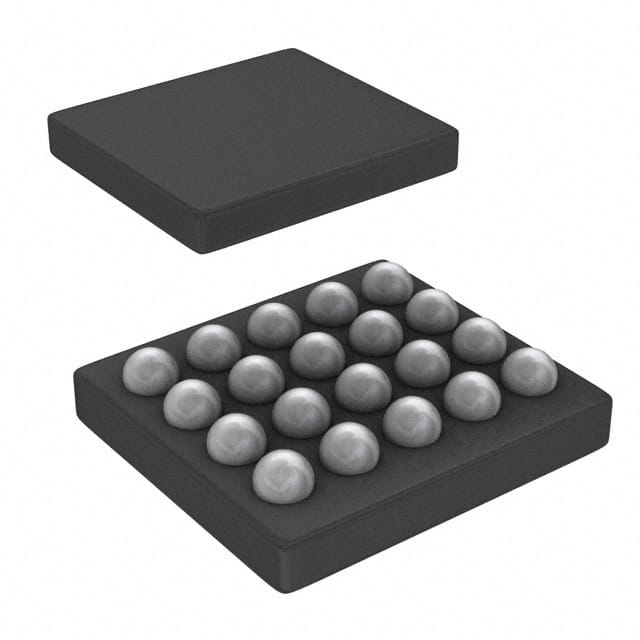
The TPS63010YFFR is available in a compact 20-pin, 2.126 mm x 1.922 mm DSBGA package, suitable for surface mount applications. It operates within a temperature range of -40°C to 125°C.
| Qty | Low | High |
|---|---|---|
| 1+ | $0.86 | $0.86 |
Estimated market price range - modelled values for guidance only, not live distributor offers.
2V to 5.5V.
Adjustable from 1.2V to 5.5V.
Up to 1.2A in step-down mode and 800mA in boost mode.
2.4MHz.
-40°C to 125°C.
20-DSBGA (0.4mm pitch) and 20-UFBGA, DSBGA.
Yes.