

| Distributor | Stock | Pricing | MOQ | PKG | Lead Time | Date Code | On Order Quantity | On Order Delivery | |
|---|---|---|---|---|---|---|---|---|---|
|
40,178 pcs
|
40178 pcs | On Request | 1 | On Request | On Request | On Request | On Request | On Request | |
|
34,310 pcs
|
34310 pcs | On Request | 1 | On Request | On Request | 25+ | On Request | On Request | |
|
2,597 pcs
|
2597 pcs | On Request | 1 | On Request | On Request | On Request | On Request | On Request | |
|
710 pcs
|
710 pcs | On Request | 1 | On Request | On Request | 21+ | On Request | On Request |
| Category | |
| Manufacturer Name | |
| Current | |
| Duty Cycle | |
| Features | |
| Frequency | |
| Function | |
| Mounting Type | |
| Number of Outputs | |
| Operating Temperature | |
| Output Configuration | |
| Output Current | |
| Output Type | |
| Quiescent Current | |
| Supplier Device Package | |
| Supplier Package | |
| Synchronous Rectifier | |
| Topology | |
| Voltage |
The TPS62177DQCR from Texas Instruments is a synchronous step-down DC/DC converter based on the DCS-Control topology. It is designed for applications requiring efficient power conversion, with a wide input voltage range from 4.75V to 28V.
This converter can deliver an output current of up to 500mA. Key electrical specifications include a typical switching frequency of 1MHz and a low quiescent current of 4.8µA in sleep mode. It features constant on-time (COT) control and DCS-Control for stable operation.
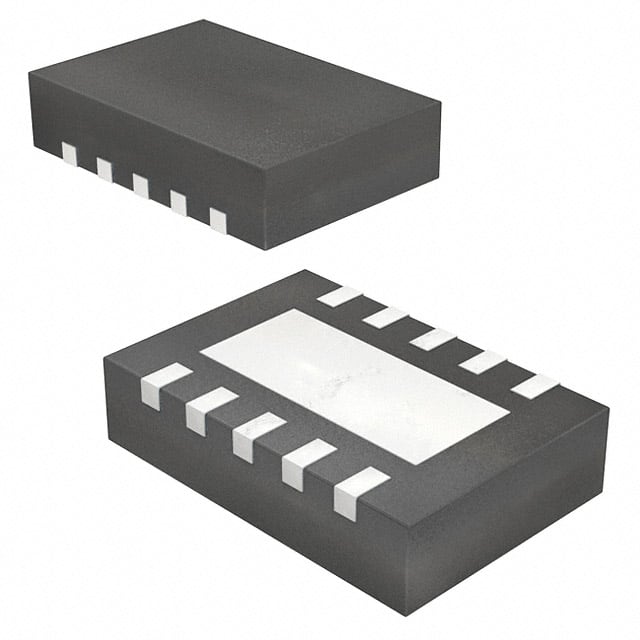
The device operates across a temperature range of -40°C to 85°C. It is available in a 10-WSON package, suitable for surface mount applications. Features such as enable, light-load efficiency, output discharge, power good, and synchronous rectification are integrated for enhanced performance and system monitoring.
| Qty | Low | High |
|---|---|---|
| 1+ | $0.60 | $0.60 |
Estimated market price range - modelled values for guidance only, not live distributor offers.
The input voltage range is 4.75V to 28V.
The output voltage range is 1V to 6V.
The maximum output current is 500mA (0.5A).
The typical switching frequency is 1 MHz.
The operating temperature range is -40°C to 85°C.
It comes in a 10-WSON (3x2) package with an exposed pad.
It uses a buck topology with Constant on-time (COT) and DCS-Control.