

| Distributor | Stock | Pricing | MOQ | PKG | Lead Time | Date Code | On Order Quantity | On Order Delivery | |
|---|---|---|---|---|---|---|---|---|---|
|
60,000 pcs
|
60000 pcs | On Request | 1 | On Request | On Request | 2018 | On Request | On Request |
| Category | |
| Manufacturer Name | |
| Current | |
| Duty Cycle | |
| Frequency | |
| Function | |
| Mounting Type | |
| Number of Outputs | |
| Operating Temperature | |
| Output Configuration | |
| Output Current | |
| Output Type | |
| Quiescent Current | |
| Supplier Device Package | |
| Synchronous Rectifier | |
| Topology | |
| Voltage |
The Texas Instruments TPS56921PWP is an obsolete synchronous buck converter designed for step-down power conversion. It features a wide input voltage range of 4.5V to 17V and can deliver a maximum output current of 9A. The output voltage is adjustable, ranging from 0.72V to 1.48V, with precise control via an I2C compatible interface.
Key electrical specifications include a switching frequency adjustable from 200kHz to 1.6MHz, integrated 26mΩ and 19mΩ MOSFETs, and a low quiescent current of 0.77mA typical. The converter includes features such as soft start, power good monitoring, overcurrent protection, and thermal shutdown.
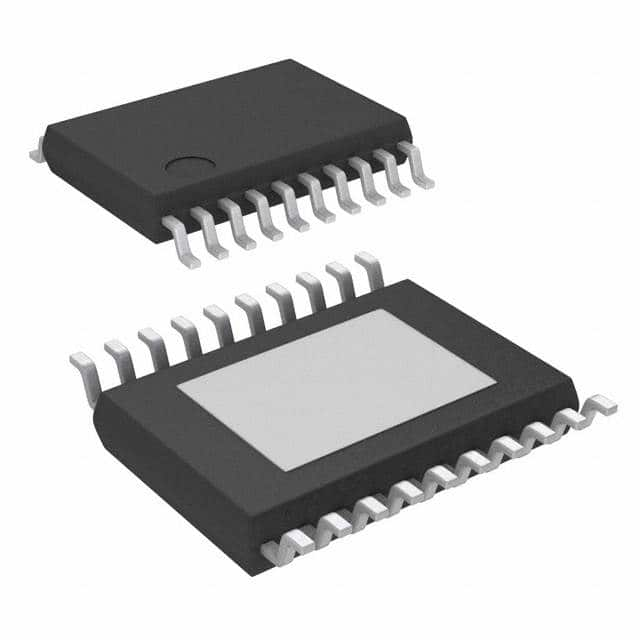
This device is housed in a 20-pin HTSSOP package with a PowerPAD, suitable for surface mount applications. The operating temperature range is -40°C to 125°C (TJ). Its design incorporates adaptive voltage scaling and synchronous rectification for improved efficiency.
Due to its obsolete status, engineers should consider alternative solutions for new designs. However, for existing systems, the TPS56921PWP offers robust performance for power management applications requiring adjustable output voltages.
| Qty | Low | High |
|---|---|---|
| 1+ | $2.24 | $2.24 |
Estimated market price range - modelled values for guidance only, not live distributor offers.
4.5V to 17V.
0.72V to 1.48V, programmable via I2C VID in 10mV steps.
20-HTSSOP (PowerTSSOP) surface mount package.
-40°C to 125°C (junction).
9A.
200kHz to 1.6MHz.
Yes, output voltage can be programmed from 0.72V to 1.48V in 10mV steps via I2C.