

| Distributor | Stock | Pricing | MOQ | PKG | Lead Time | Date Code | On Order Quantity | On Order Delivery | |
|---|---|---|---|---|---|---|---|---|---|
|
3,101 pcs
|
3101 pcs | On Request | 1 | On Request | On Request | On Request | On Request | On Request |
| Category | |
| Manufacturer Name | |
| Current | |
| Duty Cycle (Max) | |
| Frequency | |
| Function | |
| Input Voltage | |
| Mounting Type | |
| Number of Outputs | |
| Operating Temperature | |
| Output Configuration | |
| Output Current | |
| Output Type | |
| Output Voltage | |
| Supplier Device Package | |
| Supplier Package | |
| Synchronous Rectifier | |
| Topology | |
| Voltage | |
| Voltage Reference |
The Texas Instruments TPS549D22RVFR is a high-performance synchronous buck converter designed for power management applications. It features a wide input voltage range from 1.5V to 16V and can deliver a continuous output current of up to 40A.
This converter supports an adjustable output voltage ranging from 0.6V to 5.5V, making it versatile for various system requirements. Key features include PMBus communication, differential remote sense, and integrated power MOSFETs with low on-resistance. The device operates within a temperature range of -40°C to 125°C (TJ).
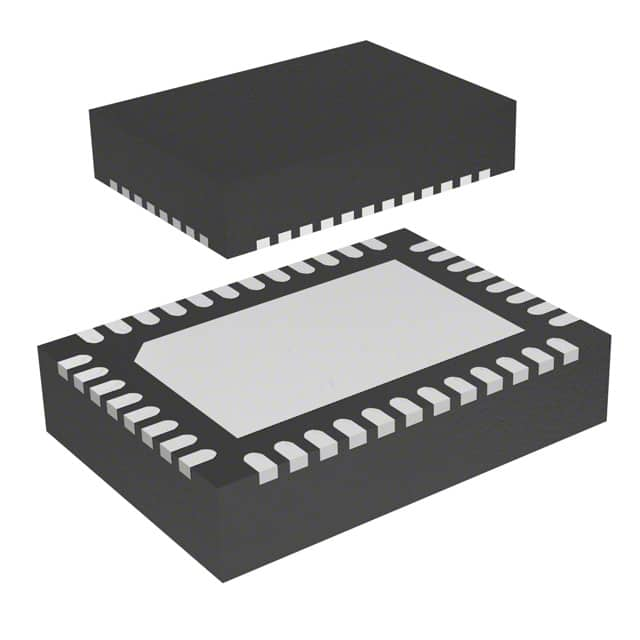
Packaged in a 40-LQFN-CLIP (7x5 mm) surface-mount form factor, the TPS549D22RVFR is suitable for designs where space is a constraint. Its topology is a buck converter with synchronous rectification, contributing to high efficiency. The selectable operating frequency allows for optimization based on design needs.
| Qty | Low | High |
|---|---|---|
| 1+ | $5.60 | $5.60 |
Estimated market price range - modelled values for guidance only, not live distributor offers.
The power-stage input voltage range is 1.5 V to 16 V, and the VDD bias voltage range is 4.5 V to 22 V.
The adjustable output range is 0.6 V to 5.5 V.
Maximum output current is 40 A.
The operating temperature range is -40°C to 125°C.
40-LQFN-CLIP, also described as 40-PowerLFQFN, surface-mount package.
Switching frequency is programmable from 315 kHz to 8 MHz.
Yes, from 0.6 V to 1.2 V in 50 mV steps using the VSEL pin.