Ready to onboard?
Are you ready to join DistyParts and
grow your business?


| Distributor | Stock | Pricing | MOQ | PKG | Lead Time | Date Code | On Order Quantity | On Order Delivery | |
|---|---|---|---|---|---|---|---|---|---|
|
2,130 pcs
|
2130 pcs | On Request | 1 | On Request | On Request | 22+ | On Request | On Request |
| Category | |
| Manufacturer Name | |
| Applications | |
| Control Mode | |
| Input Voltage | |
| Mounting Type | |
| Number of Outputs | |
| Number of Phases | |
| Operating Temperature | |
| Output Current | |
| Output Voltage | |
| Quiescent Current | |
| Supplier Device Package | |
| Supplier Package | |
| Switching Frequency | |
| Voltage |
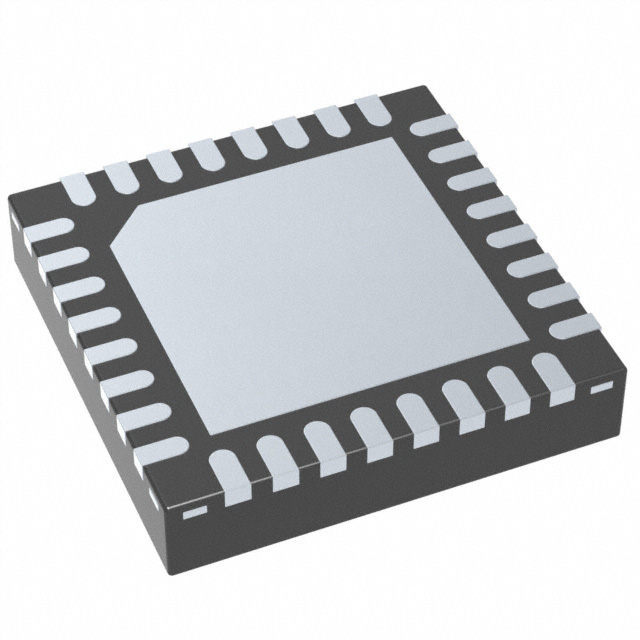
The TPS53627RSMT from Texas Instruments is a versatile 2-phase step-down controller featuring the D-CAP+ control mode. It is specifically designed to meet the demanding requirements of Intel VR13 CPU VCORE and DDR memory power delivery.
This controller supports a wide input voltage range from 4.5V to 28V, making it suitable for various system designs. The output voltage can be precisely regulated between 0.5V and 2.3V, with a maximum output current capability of 95A. The device operates with a switching frequency selectable between 300kHz and 1MHz, allowing for optimization of efficiency and component size.
Key features include adjustable current limit, dynamic voltage scaling, and phase interleaving for improved thermal performance and reduced ripple. The TPS53627RSMT is housed in a compact 32-VQFN (4x4 mm) package with an exposed pad for enhanced thermal dissipation. Its surface mount design facilitates integration into compact PCB layouts.
| Qty | Low | High |
|---|---|---|
| 1+ | $3.16 | $3.16 |
Estimated market price range - modelled values for guidance only, not live distributor offers.
The output voltage range is 0.5V to 2.3V.
The maximum input voltage is 28V.
The maximum output current is 95A.
The operating temperature range is -40°C to 105°C.
The TPS53627RSMT is supplied in a 32-VQFN (4x4mm) package.
The TPS53627RSMT uses the D-CAP+ control mode.