

| Distributor | Stock | Pricing | MOQ | PKG | Lead Time | Date Code | On Order Quantity | On Order Delivery | |
|---|---|---|---|---|---|---|---|---|---|
|
47,579 pcs
|
47579 pcs | On Request | 1 | On Request | On Request | On Request | On Request | On Request | |
|
5,049 pcs
|
5049 pcs | On Request | 1 | On Request | On Request | 1106+ | On Request | On Request | |
|
113 pcs
|
113 pcs | On Request | 1 | On Request | On Request | 10+ | On Request | On Request |
| Category | |
| Manufacturer Name | |
| Applications | |
| Duty Cycle (Max) | |
| Input Voltage | |
| Mounting Type | |
| Number of Outputs | |
| Operating Temperature | |
| Supplier Device Package | |
| Supplier Package | |
| Voltage |
The TPS51427RHBR from Texas Instruments is a dual synchronous step-down controller specifically designed for notebook and mobile communication applications. It is part of a suite of low-cost notebook power bus regulators.
This controller integrates two pulse-width-modulation (PWM) controllers, SMPS1 and SMPS2. SMPS1 output can be adjusted from 0.7V to 5.9V, while SMPS2 output ranges from 0.5V to 2.5V. Additionally, it includes a low-dropout (LDO) regulator with a fixed 3.3V/5V output or an adjustable output from 0.7V to 4.5V, capable of sourcing 100 mA.
The device operates with a wide input voltage range of 5.5V to 28V. It utilizes fixed-frequency emulated on-time control with selectable frequencies and D-CAP mode, enabling fast transient response in less than 100 ns. Advanced ramp compensation minimizes output ripple with minimal jitter. It also supports selectable PWM-Only/OOA/Auto-Skip modes for efficiency.
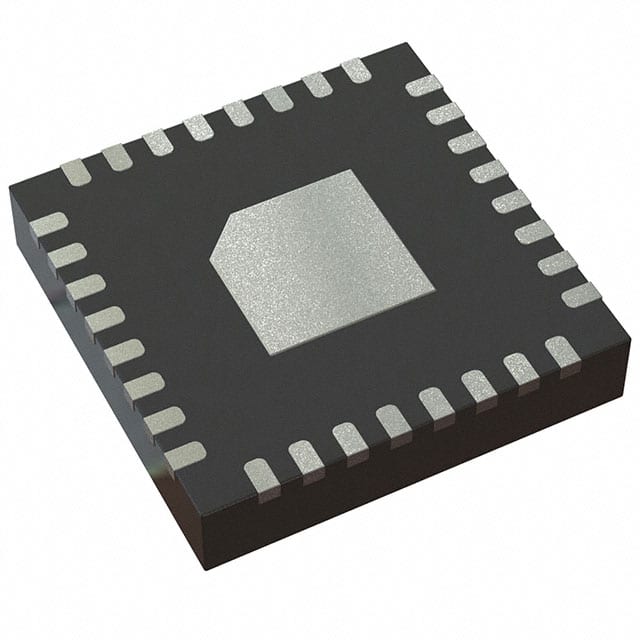
The TPS51427RHBR is available in a 32-pin VQFN package (5x5 mm) and operates over a temperature range of -40°C to 85°C. Its applications include notebook I/O and system bus rails, graphics applications, and PDAs.
| Qty | Low | High |
|---|---|---|
| 1+ | $2.39 | $2.39 |
Estimated market price range - modelled values for guidance only, not live distributor offers.
The input voltage range is 5.5 V to 28 V.
Channel 1 output is adjustable from 0.7 V to 5.9 V. Channel 2 output is adjustable from 0.5 V to 2.5 V.
The operating temperature range is -40°C to 85°C.
It is available in a 32-VQFN Exposed Pad (5x5 mm) package for surface mount mounting.
It uses D-CAP control mode.
The maximum duty cycle is 90%.