

| Distributor | Stock | Pricing | MOQ | PKG | Lead Time | Date Code | On Order Quantity | On Order Delivery | |
|---|---|---|---|---|---|---|---|---|---|
|
250 pcs
|
250 pcs | On Request | 1 | On Request | On Request | 1114+ | On Request | On Request |
| Category | |
| Manufacturer Name | |
| Current | |
| Duty Cycle | |
| Frequency | |
| Function | |
| Mounting Type | |
| Number of Outputs | |
| Operating Temperature | |
| Output Configuration | |
| Output Current | |
| Output Type | |
| Quiescent Current | |
| Supplier Device Package | |
| Supplier Package | |
| Synchronous Rectifier | |
| Topology | |
| Voltage |
The TPS51317RGBT from Texas Instruments is a fully integrated synchronous buck regulator that utilizes D-CAP+ mode architecture. Designed for 3.3-V and 5-V step-down systems, it is ideal for applications where space is a consideration and high performance with optimized component count is required.
This converter supports input voltages from 3.3V to 5V and can deliver up to 6A of output current. The output voltage is adjustable from 0.6V to 2V. It features selectable switching frequencies of 800 kHz, 1 MHz, 1.2 MHz, and 1.5 MHz, allowing for optimization of efficiency and component size. The device operates over an ambient temperature range of -40°C to 85°C.
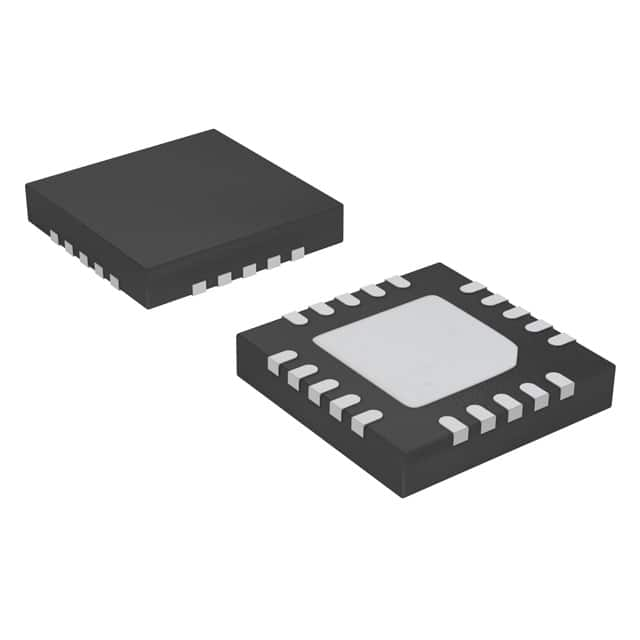
The TPS51317RGBT is housed in a compact 20-VQFN package measuring 3.5 mm x 4 mm, making it suitable for space-constrained designs. Its features include light load efficiency, output discharge, power good indication, synchronous rectification, and tracking control mode. The integrated FETs and D-CAP+ mode architecture minimize the external component count, supporting MLCC output capacitors.
| Qty | Low | High |
|---|---|---|
| 1+ | $2.10 | $2.10 |
Estimated market price range - modelled values for guidance only, not live distributor offers.
Input voltage range is 3.3V to 5V. Output voltage is adjustable from 0.6V to 2V.
The TPS51317RGBT is offered in 20-VQFN (3.5x4) and 20-VFQFN Exposed Pad surface-mount packages.
-40°C to 85°C.
Selectable frequencies: 800kHz, 1MHz, 1.2MHz, and 1.5MHz.
6A.
1.1 mA.