

| Distributor | Stock | Pricing | MOQ | PKG | Lead Time | Date Code | On Order Quantity | On Order Delivery | |
|---|---|---|---|---|---|---|---|---|---|
|
600 pcs
|
600 pcs | On Request | 1 | On Request | On Request | 22+ | On Request | On Request | |
|
250 pcs
|
250 pcs | On Request | 1 | On Request | On Request | 24+ | On Request | On Request |
| Category | |
| Manufacturer Name | |
| Duty Cycle | |
| Frequency | |
| Input Voltage | |
| Mounting Type | |
| Number of Outputs | |
| Operating Temperature | |
| Output Current | |
| Output Voltage | |
| Quiescent Current | |
| Supplier Device Package | |
| Supplier Package | |
| Topology | |
| Voltage | |
| w |
The Texas Instruments TPS51285BRUKT is an Ultra-Low Quiescent (ULQ) Dual Synchronous Step-Down Controller. It is designed to provide efficient power conversion for a wide range of applications.
Key electrical specifications include an input voltage range of 5 V to 24 V and an output voltage range of 4.5 V to 5.5 V. The controller supports a maximum output current of 20 A and features a typical quiescent current of 84 µA, contributing to long battery life in standby modes. It operates at switching frequencies of 400 kHz and 475 kHz, utilizing an adaptive on-time D-CAP mode control architecture.
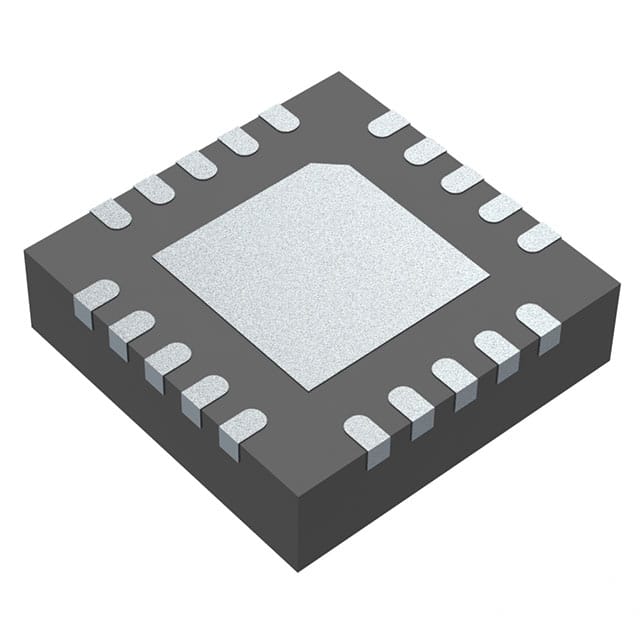
This device is housed in a 20-WQFN (3x3 mm) package, suitable for surface mount applications. It includes features such as light-load efficiency, power good indicator, synchronous rectification, and built-in output discharge. The operating temperature range is -40°C to 85°C.
The TPS51285BRUKT is suitable for various power management applications requiring efficient step-down conversion with low quiescent current.
| Qty | Low | High |
|---|---|---|
| 1+ | $0.85 | $0.85 |
Estimated market price range - modelled values for guidance only, not live distributor offers.
The input voltage range is 5 V to 24 V.
Output voltage range is 4.5 V to 5.5 V.
20 A.
-40°C to 85°C.
20-WQFN Exposed Pad (3x3 mm).
D-CAP control mode.
Four outputs: two synchronous buck converters and two LDO regulators.