

| Distributor | Stock | Pricing | MOQ | PKG | Lead Time | Date Code | On Order Quantity | On Order Delivery | |
|---|---|---|---|---|---|---|---|---|---|
|
27,300 pcs
|
27300 pcs | On Request | 1 | On Request | On Request | 19+ | On Request | On Request |
| Category | |
| Manufacturer Name | |
| Duty Cycle (Max) | |
| Operating Temperature Range | |
| Package / Case |
The TPS5124DBTR from Texas Instruments is a dual-channel, independent synchronous step-down PWM controller. It is suitable for low-voltage and high-current power supply applications, supporting input bus voltages of 5V or 12V. This controller features voltage-mode PWM control with a maximum switching frequency of 500 kHz.
Key electrical specifications include a maximum input voltage of 15V, a minimum input voltage of 4.5V, and a maximum output voltage of 12V. The minimum adjustable output voltage is 0.9V, and it supports a maximum output current of 20A. The device operates with a maximum duty cycle of 80% and a typical quiescent current of 0.0011A. It offers features such as individual standby and soft-start for each channel, enabling easy power sequencing.
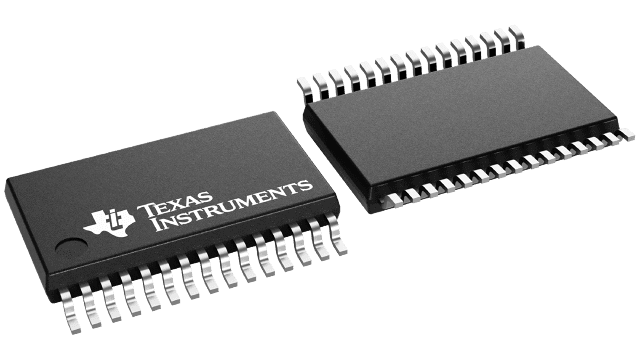
The TPS5124DBTR is housed in a 30-pin TSSOP (DBT) package with an area of 49.92 mm². It includes overvoltage and undervoltage protection, a built-in boot-strap diode, and a built-in 5V linear regulator. The reference voltage is accurate to ±1% at 0.85V. Applications include consumer game systems, DSP applications, digital set-top boxes, and VGA and sound cards.
This controller is designed for high efficiency without requiring a current sense resistor, utilizing R DS(on) overcurrent detection with temperature compensation. It also provides synchronous rectification for improved efficiency.
The input voltage range is 4.5V to 15V.
The output voltage is adjustable from 0.9V to 12V.
The maximum output current is 20A.
The operating temperature range is -40°C to 85°C.
The TPS5124DBTR is available in a TSSOP (DBT) package with 30 pins.
The maximum switching frequency is 500 kHz.
The control mode is voltage mode.