

| Distributor | Stock | Pricing | MOQ | PKG | Lead Time | Date Code | On Order Quantity | On Order Delivery | |
|---|---|---|---|---|---|---|---|---|---|
|
2,455 pcs
|
2455 pcs | On Request | 1 | On Request | On Request | On Request | On Request | On Request |
| Category | |
| Manufacturer Name | |
| Accuracy | |
| Current | |
| Features | |
| Function | |
| Mounting Type | |
| Operating Temperature | |
| Storage Temperature | |
| Supplier Device Package | |
| Tape & Reel | |
| Voltage |
The Texas Instruments TPS259401AQRVCRQ1 is an automotive-qualified eFuse with integrated short-to-battery protection. It operates from a 2.7-V to 18-V input voltage range, with a maximum continuous voltage of 20 V. The device features a low typical on-resistance of 42 mΩ and an adjustable current limit that can be set between 0.6 A and 5.3 A, with an accuracy of ±8%.
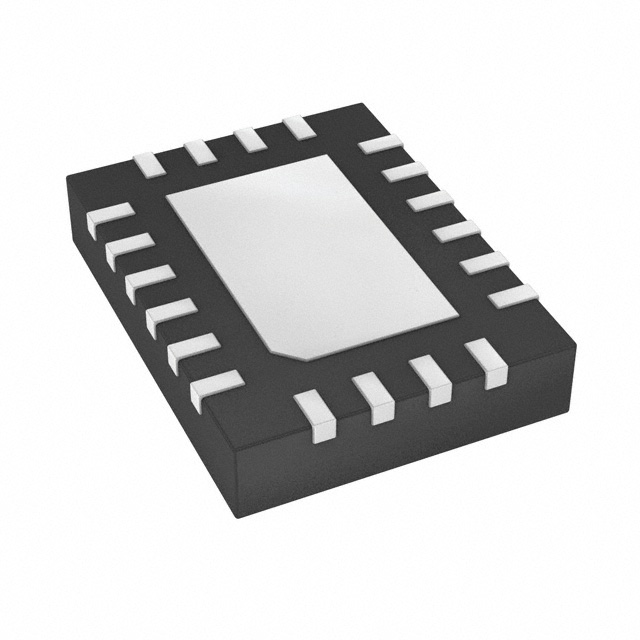
Key features include adjustable soft start, current monitoring, a fault output, overcurrent protection, overvoltage protection, a power good signal, and thermal shutdown. The fault response can be configured for auto-retry or latch-off. The eFuse is housed in a 20-WQFN (4x3 mm) package and is designed for surface mount applications.
This component is suitable for applications requiring robust power protection, such as automotive systems, industrial equipment, and consumer electronics where precise current limiting and overvoltage protection are critical. Its compact package and surface-mount design facilitate integration into space-constrained PCBs.
| Qty | Low | High |
|---|---|---|
| 1+ | $1.08 | $1.08 |
Estimated market price range - modelled values for guidance only, not live distributor offers.
The operating voltage range is 2.7V to 18V.
The current limit is adjustable from 0.6A to 5.3A.
The device is available in 20-WQFN (4x3) and 20-WFQFN Exposed Pad packages.
The typical on-resistance is 42mΩ.
It includes overcurrent, overvoltage, short-circuit, thermal shutdown, and reverse current blocking protection.
The operating temperature range is -40°C to 125°C.
Yes, the fault response can be set to auto-retry or latch-off.