

| Category | |
| Manufacturer Name | |
| Current | |
| Fault Protection | |
| Features | |
| Input Type | |
| Interface | |
| Lead Style | |
| Mounting Type | |
| Number of Outputs | |
| Operating Temperature | |
| Output Configuration | |
| Output Type | |
| Ratio | |
| Rds On (Typ) | |
| Supplier Device Package | |
| Switch Type | |
| Voltage |
The Texas Instruments TPS2051BDBVR is a high-side N-channel MOSFET power switch designed for robust power distribution systems. It is intended for applications where heavy capacitive loads and short circuits are likely to be encountered.
Key electrical specifications include a continuous current capability of 500mA and an input voltage range of 2.7V to 5.5V. The device features a low Rds On of 70mOhm typical, minimizing voltage drop and power loss. It incorporates accurate current limiting, with a range of 0.75A minimum to 1.25A maximum, along with over-temperature and undervoltage lockout (UVLO) fault protection.
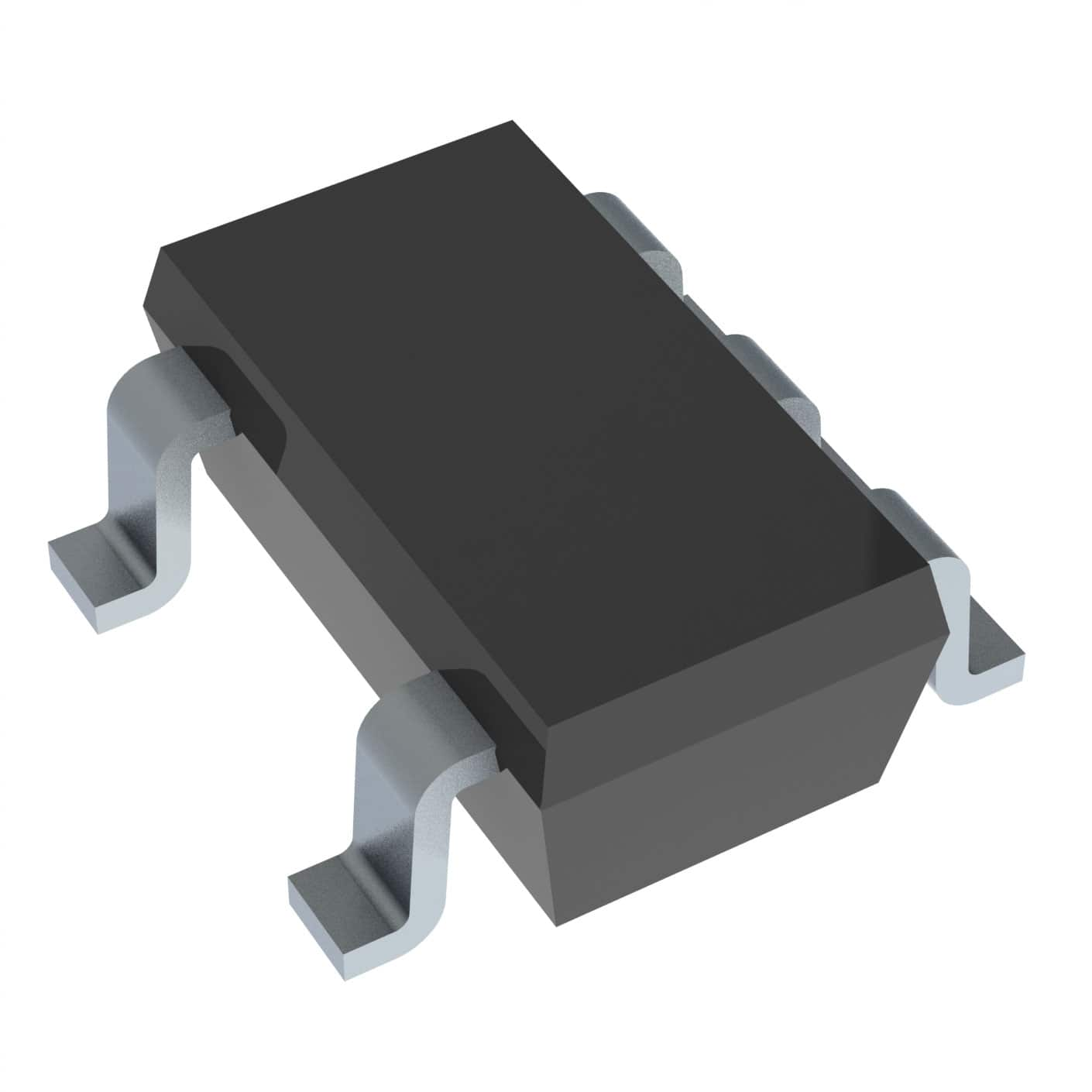
The TPS2051BDBVR is available in a SOT-23-5 package, suitable for surface mounting. It operates within an ambient temperature range of -40°C to 85°C, with a junction temperature range of -40°C to 125°C. The device also features a typical rise time of 0.6ms and a maximum standby supply current of 1µA, contributing to power efficiency.
This load switch is controlled by a logic enable input and provides a status flag output. Its design includes thermal and short-circuit protection, making it a reliable choice for protecting sensitive circuitry from power faults.
| Qty | Low | High |
|---|---|---|
| 1+ | $0.23 | $0.23 |
Estimated market price range - modelled values for guidance only, not live distributor offers.
The input voltage range is 2.7V to 5.5V.
It is available in SOT-23-5 (SC-74A) package.
The junction temperature range is -40°C to 125°C, and the ambient temperature range is -40°C to 85°C.
The continuous output current is 500mA.
The typical Rds(on) is 70mOhm.
The current limit range is 0.75A minimum to 1.25A maximum.
The maximum standby supply current is 1µA.