

| Distributor | Stock | Pricing | MOQ | PKG | Lead Time | Date Code | On Order Quantity | On Order Delivery | |
|---|---|---|---|---|---|---|---|---|---|
|
12,914 pcs
|
12914 pcs | On Request | 1 | On Request | On Request | On Request | On Request | On Request |
| Category | |
| Manufacturer Name | |
| Clock Frequency | |
| Data Rate | |
| Lead Spacing | |
| Mounting Type | |
| Operating Voltage | |
| Storage Temperature | |
| Supplier Device Package | |
| Supplier Package | |
| Tape & Reel | |
| Technology | |
| Type | |
| Voltage |
The TOIM5232-TR3 from Vishay Dale is an integrated interface circuit (IC) that provides pulse shaping for SIR IrDA front-end infrared transceivers. It is designed to interface directly between an RS232 port and an SIR transceiver.
In transmit mode, the TOIM5232-TR3 shortens RS232 output signals into IrDA-compatible electrical pulses to drive the infrared transmitter. In receive mode, it stretches received infrared pulses to the correct bit width based on the operating bit rate, which can range from 2.4 kbit/s to 115.2 kbit/s. The device utilizes a 3.6864 MHz crystal clock for pulse shaping and is programmable via the RS232 port for baud rates from 1200 bit/s to 115.2 kbit/s.
Key features include software-programmable output pulses (1.627 μs or 3/16 of bit time), low operating current (10 mW typical), and a standby mode consuming microwatts. The IC is built using ULC Technology with sub-micron channel lengths (0.35 μm).
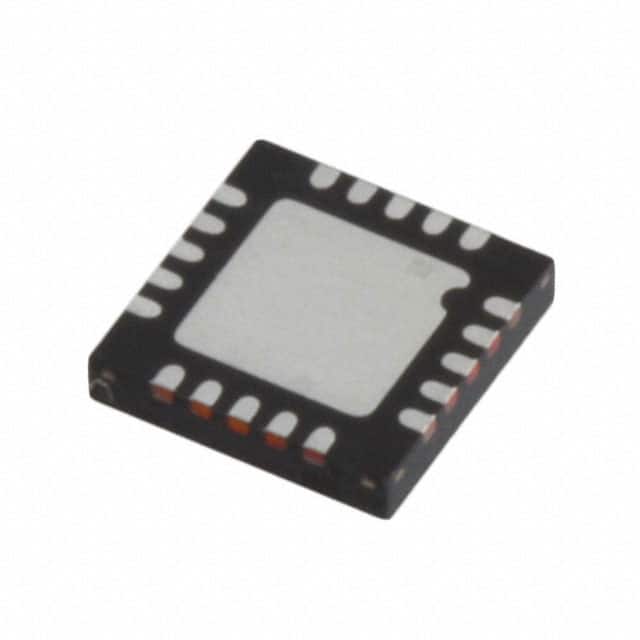
The TOIM5232-TR3 is housed in a compact 4 mm x 4 mm x 0.75 mm QFN-20 package, making it suitable for space-constrained designs. It operates from a 2.7V to 3.6V supply and features 5V tolerant inputs. The component is qualified for lead (Pb)-free and Sn/Pb solder processing with an MSL3 rating.
| Qty | Low | High |
|---|---|---|
| 1+ | $0.99 | $0.99 |
Estimated market price range - modelled values for guidance only, not live distributor offers.
The operating voltage range is 2.7V to 3.6V.
The TOIM5232-TR3 is supplied in a 20-QFN (4x4) package.
The TOIM5232-TR3 supports data rates up to 115.2 kbit/s.
The typical power consumption in operational state is 10 mW.