

| Distributor | Stock | Pricing | MOQ | PKG | Lead Time | Date Code | On Order Quantity | On Order Delivery | |
|---|---|---|---|---|---|---|---|---|---|
|
2,340 pcs
|
2340 pcs | On Request | 1 | On Request | On Request | On Request | On Request | On Request | |
|
2,260 pcs
|
2260 pcs | On Request | 1 | On Request | On Request | On Request | On Request | On Request |
| Category | |
| Manufacturer Name | |
| Clock Rate | |
| Interface | |
| Mounting Type | |
| Non | |
| On | |
| Operating Temperature | |
| Supplier Device Package | |
| Type | |
| Voltage |
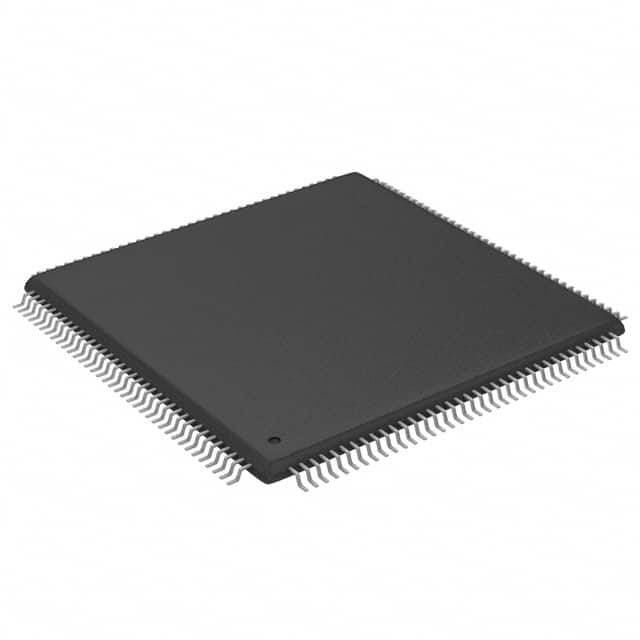
The Texas Instruments TMS320C6726BRFP266 is a high-performance Floating Point Digital Signal Processor (DSP) designed for demanding embedded applications. It features a clock rate of 266MHz, enabling intensive computational tasks.
This DSP operates with a core supply voltage of 1.2V and an I/O voltage of 3.3V. It includes 288kB of on-chip RAM and 384kB of ROM for non-volatile memory.
The TMS320C6726BRFP266 is housed in a 144-TQFP Exposed Pad package and supports surface mount installation. Its operating temperature range is from 0°C to 90°C (TC).
Key interfaces include EBI/EMI, I²C, McASP, and SPI, facilitating communication with other system components. This DSP is suitable for applications requiring real-time audio and video processing, communication systems, and industrial control.
| Qty | Low | High |
|---|---|---|
| 1+ | $33.86 | $33.86 |
Estimated market price range - modelled values for guidance only, not live distributor offers.
The clock rate of the TMS320C6726BRFP266 is 266MHz.
The TMS320C6726BRFP266 operates with a core voltage of 1.2V and an I/O voltage of 3.3V.
The operating temperature range for the TMS320C6726BRFP266 is 0°C to 90°C (TC).
The TMS320C6726BRFP266 has 288kB of on-chip RAM.
The TMS320C6726BRFP266 features 384kB of ROM for non-volatile memory.
The TMS320C6726BRFP266 is supplied in a 144-TQFP Exposed Pad package.
The TMS320C6726BRFP266 is suitable for real-time audio and video processing, communication systems, industrial control systems, and scientific computing.