

| Distributor | Stock | Pricing | MOQ | PKG | Lead Time | Date Code | On Order Quantity | On Order Delivery | |
|---|---|---|---|---|---|---|---|---|---|
|
3,183 pcs
|
3183 pcs | On Request | 1 | On Request | On Request | 14+ | On Request | On Request |
| Category | |
| Manufacturer Name | |
| Control Features | |
| Current | |
| Mounting Type | |
| Number of Regulators | |
| Operating Temperature | |
| Output Configuration | |
| Output Type | |
| PSRR | |
| Protection Features | |
| Supplier Device Package | |
| Voltage |
The TLV71211DBVR from Texas Instruments is a low-dropout (LDO) linear voltage regulator designed for various power management applications. It provides a stable fixed output voltage of 1.1V and can supply up to 300mA of current.
Key electrical specifications include a high Power Supply Rejection Ratio (PSRR) of 68 dB at 1 kHz, indicating its effectiveness in filtering noise from the power supply. The device features a low quiescent current of 55 µA, making it suitable for battery-powered devices. Protection features include overcurrent, over temperature, short circuit, and under voltage lockout (UVLO).
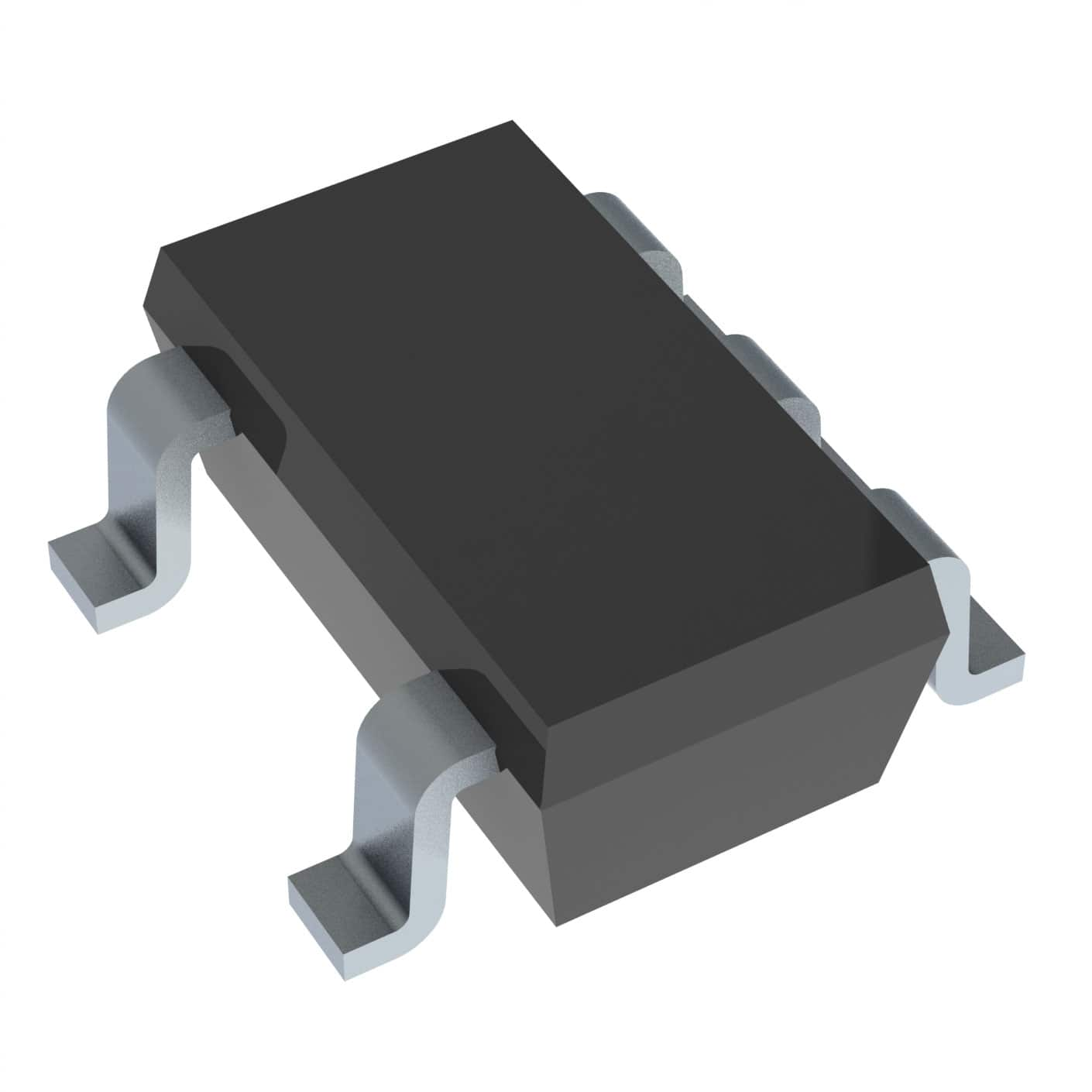
This regulator is available in a compact SOT-23-5 package, suitable for surface mount applications where space is limited. The operating temperature range is -40°C to 125°C (TJ). The device also includes an enable control feature.
Applications for the TLV71211DBVR include wireless handsets, smart phones, PDAs, MP3 players, ZigBee networks, Bluetooth devices, Li-Ion operated handheld products, and WLAN cards.
| Qty | Low | High |
|---|---|---|
| 1+ | $0.14 | $0.14 |
Estimated market price range - modelled values for guidance only, not live distributor offers.
The output voltage is fixed at 1.1V.
It is available in SOT-23-5 (also known as SC-74A, SOT-753).
The operating junction temperature range is -40°C to 125°C.
The typical quiescent current is 35µA, with a maximum of 55µA.
The power supply rejection ratio is 68dB at 1kHz.
It includes over current, over temperature, short circuit, and under voltage lockout (UVLO).
Yes, an enable control feature is available.