

| Distributor | Stock | Pricing | MOQ | PKG | Lead Time | Date Code | On Order Quantity | On Order Delivery | |
|---|---|---|---|---|---|---|---|---|---|
|
7,950 pcs
|
7950 pcs | On Request | 1 | On Request | On Request | 18+ | On Request | On Request |
| Category | |
| Manufacturer Name | |
| CMRR, PSRR (Typ) | |
| Current | |
| Lead Spacing | |
| Lead Style | |
| Mounting Type | |
| Number of Channels | |
| Number of Elements | |
| Operating Temperature | |
| Operating Voltage | |
| Output Type | |
| Propagation Delay | |
| Supplier Device Package | |
| Type | |
| Voltage |
The TLV3702IP from Texas Instruments is a dual nanopower comparator belonging to the TLV370x family. This device is ideal for battery-powered and wireless handset applications due to its extremely low supply current of 560 nA per channel.
It features a wide supply voltage range of 2.5 V to 16 V and an input common-mode range that exceeds the rails, from -0.1 V to VCC + 5 V. The comparator offers reverse battery protection up to 18 V and a push-pull CMOS output stage. It is specified for operation across a wide temperature range, from -40°C to 125°C for the industrial grade.
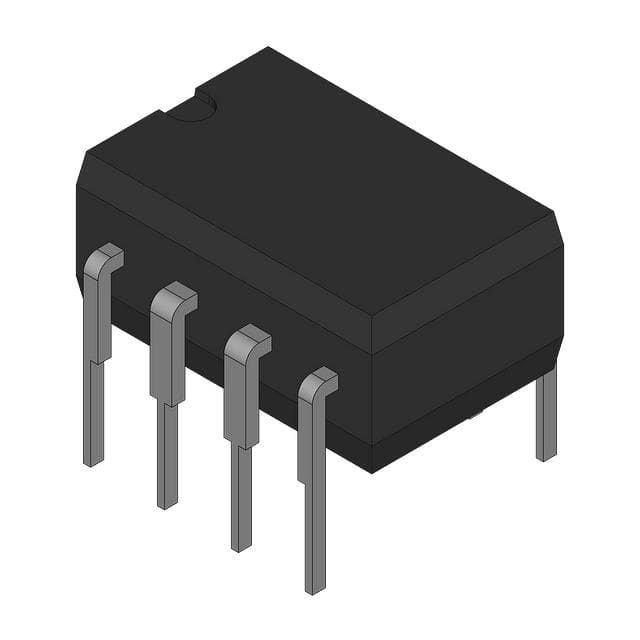
The TLV3702IP is available in an 8-pin PDIP package, suitable for through-hole mounting. Its low quiescent current makes it an excellent choice for portable applications where power consumption is a primary concern.
Key electrical characteristics include a typical supply current of 560 nA per channel, a maximum offset voltage of 5 mV at 25°C, and a propagation delay of 36 µs. The device also boasts high CMRR and PSRR values.
| Qty | Low | High |
|---|---|---|
| 1+ | $1.71 | $1.71 |
Estimated market price range - modelled values for guidance only, not live distributor offers.
The TLV3702IP operates from a supply voltage range of 2.5 V to 16 V.
The typical supply current per channel for the TLV3702IP is 560 nA.
The TLV3702IP has an operating temperature range of -40°C to 125°C.
The TLV3702IP is available in an 8-PDIP package.
The TLV3702IP features a push-pull CMOS output stage.