

| Distributor | Stock | Pricing | MOQ | PKG | Lead Time | Date Code | On Order Quantity | On Order Delivery | |
|---|---|---|---|---|---|---|---|---|---|
|
1,064 pcs
|
1064 pcs | On Request | 1 | On Request | On Request | On Request | On Request | On Request | |
|
10 pcs
|
10 pcs | On Request | 1 | On Request | On Request | On Request | On Request | On Request |
| Category | |
| Manufacturer Name | |
| CMRR, PSRR (Typ) | |
| Current | |
| Hysteresis | |
| Mounting Type | |
| Number of Elements | |
| Operating Temperature | |
| Output Type | |
| Propagation Delay (Max) | |
| Supplier Device Package | |
| Supply Voltage | |
| Type | |
| Voltage |
The TLV3601DCKR from Texas Instruments is a 325 MHz, high-speed comparator characterized by its fast 2.5 ns propagation delay and narrow pulse width detection capability of 1.25 ns. It features rail-to-rail inputs and push-pull outputs, simplifying interface designs and reducing power consumption.
With a wide supply voltage range of 2.4 V to 5.5 V and a low input offset voltage of ±5 mV, this comparator is suitable for various applications. Its input common-mode range extends 200 mV beyond both rails, providing flexibility in signal handling.
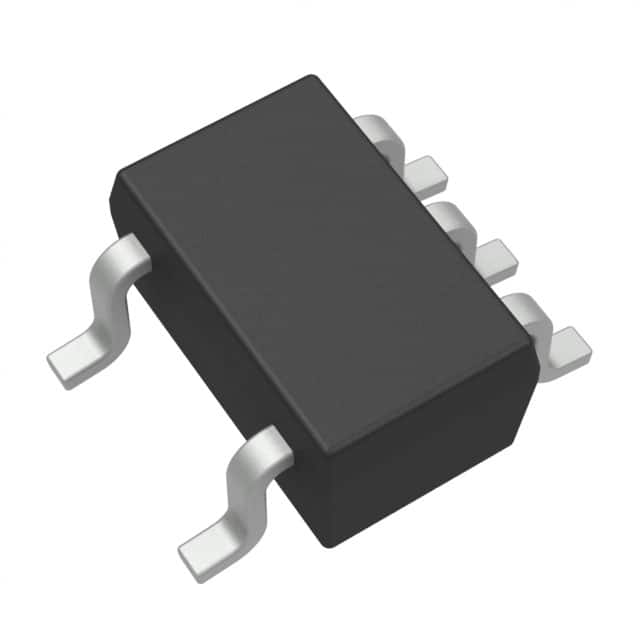
The TLV3601DCKR is housed in a compact SC-70-5 package, making it ideal for space-constrained designs. It operates within a temperature range of -40°C to 125°C. Key electrical characteristics include a typical current consumption of 7 mA and a typical hysteresis of 60 mV.
This comparator is well-suited for applications such as laser distance meters, clock and data recovery, high-speed trigger functions in oscilloscopes and logic analyzers, and distance sensing in LIDAR systems.
| Qty | Low | High |
|---|---|---|
| 1+ | $1.84 | $1.84 |
Estimated market price range - modelled values for guidance only, not live distributor offers.
The maximum propagation delay is 3.5 nanoseconds.
The supply voltage range is 2.4 V to 5.5 V.
It comes in a SC-70-5 package.
The input common-mode range extends 200 mV beyond both rails.
The hysteresis is 60 millivolts.