

| Distributor | Stock | Pricing | MOQ | PKG | Lead Time | Date Code | On Order Quantity | On Order Delivery | |
|---|---|---|---|---|---|---|---|---|---|
|
2,129 pcs
|
2129 pcs | On Request | 1 | On Request | On Request | 09+ | On Request | On Request |
| Category | |
| Manufacturer Name | |
| Data Interface | |
| Mounting Type | |
| Number of ADCs | |
| Operating Temperature | |
| Resolution (Bits) | |
| S | |
| Serial Interfaces | |
| Sigma Delta | |
| Supplier Device Package | |
| Type | |
| Voltage |
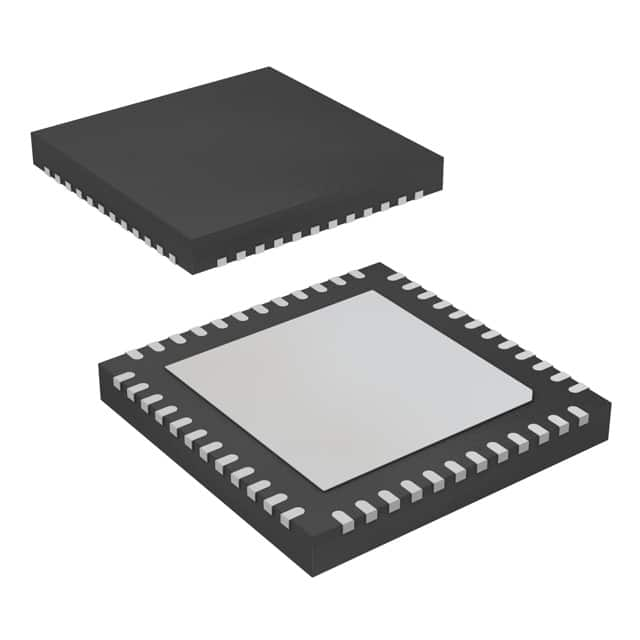
The Texas Instruments TLV320AIC29IRGZR is a low-power, high-performance stereo audio codec designed for various applications including smartphones and digital cameras. It features a 24-bit resolution and supports sample rates up to 48 ksps.
Key electrical characteristics include a high-quality 95-dB stereo audio playback performance, a 400-mW 8-Ω audio power amplifier with direct battery supply connection, and a stereo 16-Ω headphone amplifier. The device also includes a MIC preamp with automatic gain control and supports SPI and I2S serial interfaces.
This audio codec operates within a voltage range of 3V to 3.6V and has an operating temperature range of -40°C to 85°C. It is housed in a 48-VQFN (7x7) package with surface mount mounting type.
Additional features include auto-detection of jack insertion and headset type, direct battery measurement accepting up to 6-V input, and integrated PLL for flexible audio clock generation. Its low power consumption of 19-mW during stereo audio playback at 48 ksps makes it suitable for battery-powered devices.
| Qty | Low | High |
|---|---|---|
| 1+ | $3.57 | $3.57 |
Estimated market price range - modelled values for guidance only, not live distributor offers.
The operating voltage is 3V to 3.6V.
The TLV320AIC29IRGZR is available in a 48-VQFN (7x7) package.
The operating temperature range is -40°C to 85°C.
The TLV320AIC29IRGZR is RoHS3 Compliant.
The stereo audio playback performance is 95-dB.
The audio power amplifier is rated at 400-mW 8-Ω.
The supported serial interfaces are SPI and I2S.