

| Distributor | Stock | Pricing | MOQ | PKG | Lead Time | Date Code | On Order Quantity | On Order Delivery | |
|---|---|---|---|---|---|---|---|---|---|
|
1,321 pcs
|
1321 pcs | On Request | 1 | On Request | On Request | On Request | On Request | On Request |
| Category | |
| Manufacturer Name | |
| Duplex | |
| Mounting Type | |
| Number of Drivers | |
| Operating Temperature | |
| Operating Voltage | |
| Protocol | |
| Supplier Device Package | |
| Type | |
| Voltage |
The Texas Instruments TLK110PT is an industrial 10/100 Ethernet PHY transceiver designed for robust performance. This device supports MII and RMII protocols and operates in full duplex mode.
Key electrical specifications include a low power consumption of less than 205mW for single supply and less than 126mW for dual supplies. It features programmable power back-off for reduced power consumption and low deterministic latency supporting IEEE1588 implementation. The operating voltage range is from 3V to 3.6V, with variable I/O voltage support from 1.8V to 3.3V.
The TLK110PT offers error-free 100Base-T operation up to 150 meters and 10Base-T operation up to 300 meters under typical conditions. It includes features such as cable diagnostics, programmable fast link down modes with less than 10µs reaction time, Auto-MDIX for 10/100Mbs, and energy detection mode.
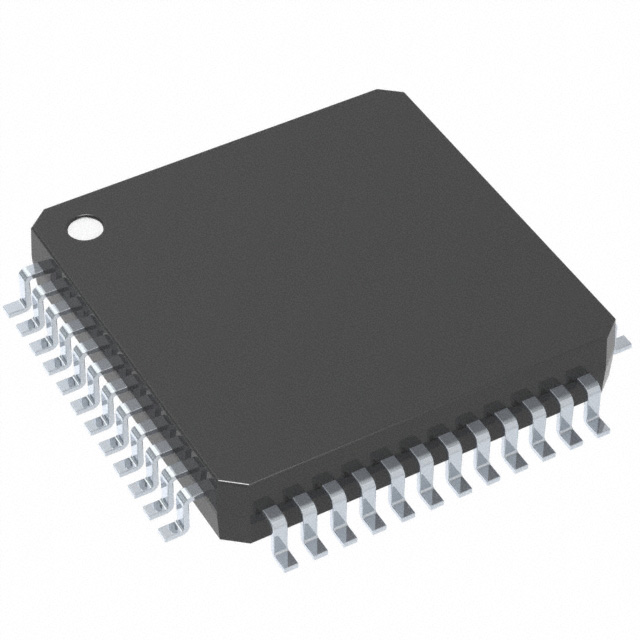
Packaged in a 48-LQFP (7x7) surface-mount form factor, the TLK110PT is rated for an operating temperature range of -40°C to 85°C. It is supplied in JEDEC TRAY packaging with a standard quantity of 250 units.
| Qty | Low | High |
|---|---|---|
| 1+ | $5.13 | $5.13 |
Estimated market price range - modelled values for guidance only, not live distributor offers.
The operating temperature range for the TLK110PT is -40°C to 85°C.
The TLK110PT is supplied in a 48-LQFP package.
The TLK110PT supports MII and RMII protocols.
The typical power consumption is less than 205mW for single supply and less than 126mW for dual supplies.
The TLK110PT supports error-free 100Base-T operation up to 150 meters under typical conditions.