

| Distributor | Stock | Pricing | MOQ | PKG | Lead Time | Date Code | On Order Quantity | On Order Delivery | |
|---|---|---|---|---|---|---|---|---|---|
|
9,030 pcs
|
9030 pcs | On Request | 1 | On Request | On Request | 18+ | On Request | On Request | |
|
2,000 pcs
|
2000 pcs | On Request | 1 | On Request | On Request | 1344+ | On Request | On Request |
| Category | |
| Manufacturer Name | |
| Mounting Type | |
| Number of Voltages Monitored | |
| Operating Temperature | |
| Operating Voltage | |
| Output | |
| Reset | |
| Reset Timeout | |
| Supplier Device Package | |
| Supplier Package | |
| Supply Current | |
| Type | |
| Voltage |
The TLC7705IPWR is a micropower supply voltage supervisor from Texas Instruments, designed for reset control in microcomputer and microprocessor systems. It features a supply voltage range of 2 V to 6 V and a maximum supply current of 16 µA. The device provides a precision voltage sensor with temperature compensation and a defined RESET output that is active when VDD reaches 1 V.
This supervisor offers automatic reset generation after a voltage drop and supports power-down control for static RAM with battery backup. The reset delay time is programmable by an external capacitor. The TLC7705IPWR has a fixed sense threshold voltage and outputs that remain active until the sense voltage returns above the threshold and a delay time has expired. It operates within a temperature range of -40°C to 85°C (TA).
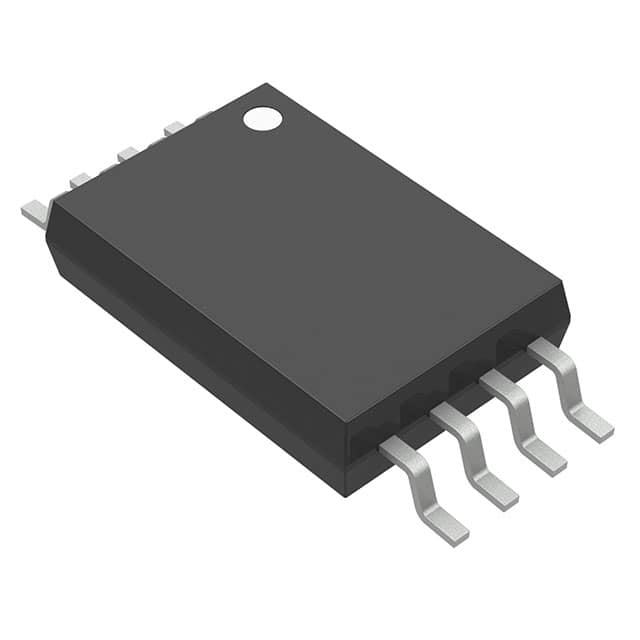
The TLC7705IPWR is available in an 8-TSSOP package with surface mount mounting type. It provides active high/active low reset and push-pull, totem pole outputs. This component is suitable for applications requiring reliable power-on reset and undervoltage monitoring.
| Qty | Low | High |
|---|---|---|
| 1+ | $0.75 | $0.75 |
Estimated market price range - modelled values for guidance only, not live distributor offers.
2 V to 6 V.
4.55 V.
1.1 ms minimum.
-40°C to 85°C (TA) with extended range up to -55°C to 125°C.
8-TSSOP (0.173", 4.40mm Width) surface mount.
Push-pull, totem pole.
Both active high and active low.