

| Distributor | Stock | Pricing | MOQ | PKG | Lead Time | Date Code | On Order Quantity | On Order Delivery | |
|---|---|---|---|---|---|---|---|---|---|
|
56,500 pcs
|
56500 pcs | On Request | 1 | On Request | On Request | On Request | On Request | On Request |
| Category | |
| Manufacturer Name | |
| Current | |
| Mounting Type | |
| Number of Elements | |
| Operating Temperature | |
| Output Type | |
| Supplier Device Package | |
| Supply Current | |
| Type | |
| Voltage |
The Texas Instruments TLC374CD is a quadruple differential comparator fabricated using LinCMOS technology. It consists of four independent voltage comparators designed to operate from a single power supply, with dual supply operation also possible if the difference between the two supplies is 2 V to 18 V. This device offers a high input impedance, typically greater than 10^12 Ω, allowing direct interfacing with high-impedance sources.
Key electrical characteristics include a supply voltage range of 2 V to 18 V and a very low supply current drain of 0.3 mA typical at 5 V. The propagation delay time is fast, at 200 ns typical for a TTL-level input step. The offset voltage at 25°C is a maximum of 5 mV, and the input bias current is extremely low, typically 5 pA.
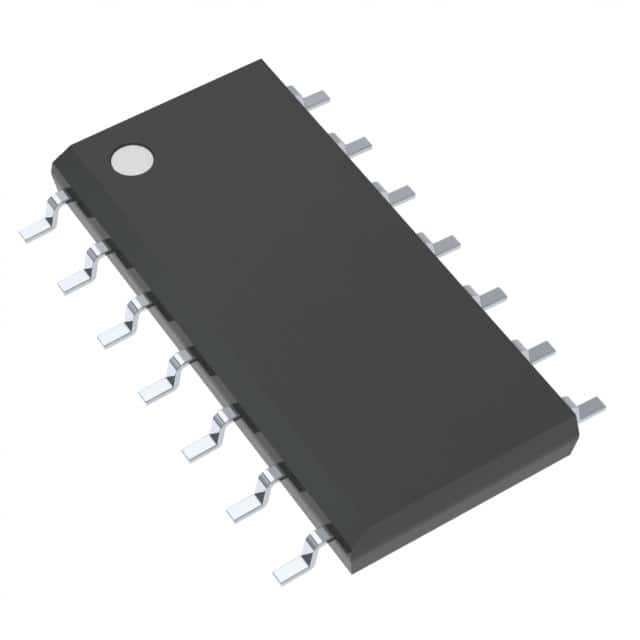
The TLC374CD is available in a 14-SOIC package and is designed for surface mount applications. Its outputs are compatible with TTL, MOS, and CMOS logic levels. The operating temperature range is from -55°C to 125°C, making it suitable for a variety of environmental conditions.
This comparator is pin-compatible with the LM339 and offers features like built-in ESD protection and ultrastable low input offset voltage. The common-mode input voltage range includes ground.
| Qty | Low | High |
|---|---|---|
| 1+ | $0.72 | $0.72 |
Estimated market price range - modelled values for guidance only, not live distributor offers.
The operating temperature range is -55°C to 125°C.
The TLC374CD is available in a 14-SOIC package.
The supply voltage range is 2 V to 18 V.
The TLC374CD has 4 channels.
The typical input bias current is 5 pA.
The typical propagation delay time is 200 ns.