

| Distributor | Stock | Pricing | MOQ | PKG | Lead Time | Date Code | On Order Quantity | On Order Delivery | |
|---|---|---|---|---|---|---|---|---|---|
|
2,748 pcs
|
2748 pcs | On Request | 1 | On Request | On Request | 1106+ | On Request | On Request |
| Category | |
| Manufacturer Name | |
| CMRR, PSRR (Typ) | |
| Current | |
| Mounting Type | |
| Number of Elements | |
| Operating Temperature | |
| Output Type | |
| Propagation Delay (Max) | |
| Supplier Device Package | |
| Type | |
| Voltage |
The Texas Instruments TLC3704QDRG4Q1 is a quad micropower voltage comparator featuring LinCMOS technology. It is designed to operate from a single supply voltage ranging from 3V to 16V, making it compatible with modern HCMOS logic systems. This device offers very low power consumption, typically 200µW at 5V, and a fast response time of 2.7µs with a 5mV overdrive.
The comparator has a push-pull CMOS output stage that can drive capacitive loads without requiring a pullup resistor, saving power, board space, and component cost. The output stage is also fully compatible with TTL requirements. The TLC3704QDRG4Q1 provides on-chip ESD protection, exceeding 2000V per MIL-STD-883, Method 3015.
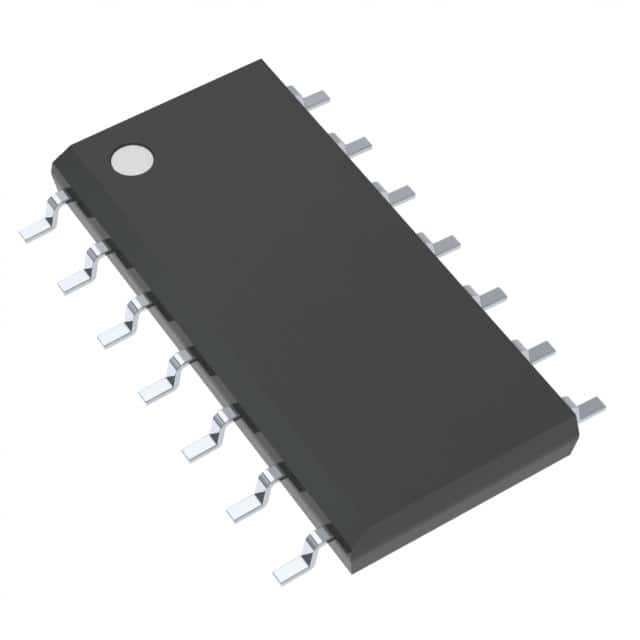
This component is qualified for automotive applications and operates within an ambient temperature range of -40°C to 125°C. It is supplied in a 14-SOIC surface-mount package with a standard reel quantity of 2,500 units.
Key electrical characteristics include a typical current consumption of 175µA, a maximum propagation delay of 4.5µs, and a typical CMRR/PSRR of 84dB. The device is RoHS3 compliant and has an MSL rating of 1.
| Qty | Low | High |
|---|---|---|
| 1+ | $0.88 | $0.88 |
Estimated market price range - modelled values for guidance only, not live distributor offers.
The TLC3704QDRG4Q1 operates from a single supply voltage ranging from 3V to 16V.
The TLC3704QDRG4Q1 is available in a 14-SOIC package.
This comparator operates within a temperature range of -40°C to 125°C.
Yes, the TLC3704QDRG4Q1 is RoHS3 compliant.
The typical power consumption is 200µW at 5V.
The typical response time is 2.7µs with a 5mV overdrive.