

| Distributor | Stock | Pricing | MOQ | PKG | Lead Time | Date Code | On Order Quantity | On Order Delivery | |
|---|---|---|---|---|---|---|---|---|---|
|
2,500 pcs
|
2500 pcs | On Request | 1 | On Request | On Request | On Request | On Request | On Request |
| Category | |
| Manufacturer Name | |
| Features | |
| Mounting Type | |
| Number of Channels | |
| Storage Temperature | |
| Supplier Device Package | |
| Tape & Reel | |
| Voltage | |
| With Modem Control |
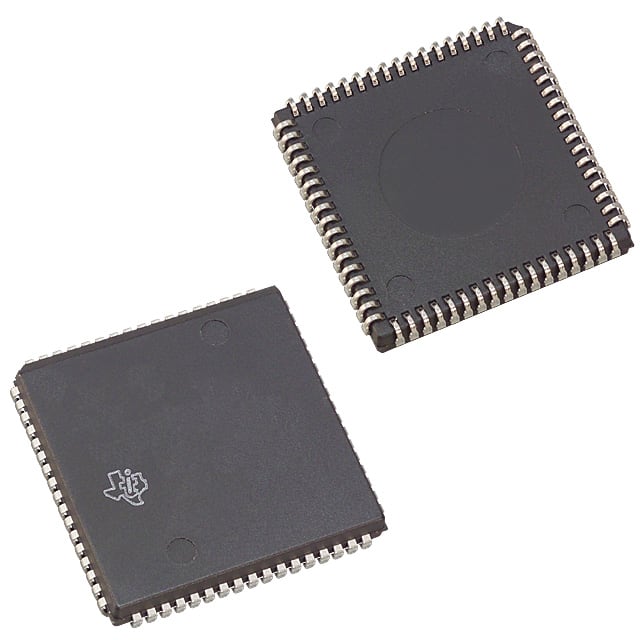
The Texas Instruments TL16C452FNR is an active Dual UART (Universal Asynchronous Receiver Transmitter) integrated circuit that also includes a Centronix-type parallel port interface. This device integrates functions commonly found on communications cards for IBM PC/AT compatibles, providing serial-to-parallel and parallel-to-serial data conversion.
The serial interfaces offer fully programmable characteristics, including 5-, 6-, 7-, or 8-bit character lengths, even/odd/no parity generation and detection, and 1-, 1.5-, or 2-stop bit generation. The programmable baud rate supports speeds from DC up to 256 kbit/s, ensuring reliable asynchronous operation through double buffering.
This component features modem control signals (CTS, DSR, RLSD, RI) and provides status monitoring for transmitter, receiver, and detected errors. The parallel interface is bidirectional and conforms to Centronix printer interface requirements. The TL16C452FNR is available in a 68-PLCC surface mount package and operates within a voltage range of 4.75V to 5.25V.
| Qty | Low | High |
|---|---|---|
| 1+ | $5.55 | $5.55 |
Estimated market price range - modelled values for guidance only, not live distributor offers.
The operating voltage is between 4.75V and 5.25V.
The TL16C452FNR is available in a 68-PLCC (24.23x24.23) package, also described as 68-LCC (J-Lead).
Yes, the TL16C452FNR supports modem control.
Key features include a dual UART with a parallel port, printer port functionality, and programmable serial interface characteristics.
The TL16C452FNR supports a programmable baud rate up to 256 kbit/s.