
TJA1055T/C,518
NXP Semiconductors
The NXP Semiconductors TJA1055T/C,518 is a half-duplex CAN transceiver designed for low-speed automotive applications. It operates at up to 125 kBd and offers enhanced ESD protection.


| Distributor | Stock | Pricing | MOQ | PKG | Lead Time | Date Code | On Order Quantity | On Order Delivery | |
|---|---|---|---|---|---|---|---|---|---|
|
5,000 pcs
|
5000 pcs | On Request | 1 | On Request | On Request | On Request | On Request | 2026-02-16 21:33:16 | |
|
2,500 pcs
|
2500 pcs | On Request | 1 | On Request | On Request | On Request | On Request | On Request | |
|
1,970 pcs
|
1970 pcs | On Request | 1 | On Request | On Request | On Request | On Request | On Request |
| Category | |
| Manufacturer Name | |
| Duplex | |
| Mounting Type | |
| Number of Drivers | |
| Operating Temperature | |
| Protocol | |
| Supplier Device Package | |
| Type | |
| Voltage |
The TJA1055T/CM,118 from NXP Semiconductors is an enhanced, fault-tolerant CAN transceiver primarily intended for low-speed applications up to 125 kBd in passenger cars. It provides differential receive and transmit capabilities, with automatic switching to single-wire modes in error conditions.
Key features include high ESD robustness (±8 kV HBM, ±6 kV IEC 61000-4-2), low current consumption in sleep mode, and wake-up signaling without VCC active. The device supports up to 32 nodes on unshielded bus wires and offers very low electromagnetic emission (EME) due to its built-in slope control function.
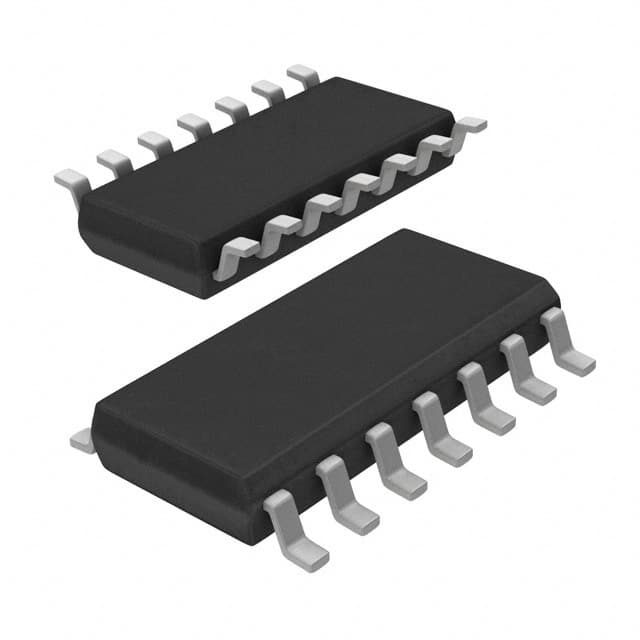
Designed for reliability, the TJA1055T/CM,118 includes bus failure management, thermal protection, and bus lines protected against transients. It operates over a voltage range of 4.75V to 5.25V and a temperature range of -40°C to 125°C. The transceiver is available in a 14-SO surface mount package.
This component is suitable for various automotive in-car communication systems where robust and reliable CAN communication is essential.
| Qty | Low | High |
|---|---|---|
| 1+ | $1.44 | $1.44 |
Estimated market price range - modelled values for guidance only, not live distributor offers.
The operating voltage range is 4.75V to 5.25V.
The operating temperature range is -40°C to 125°C.
It is available in a 14-SO package.
The device supports a maximum baud rate of 125 kBd.
It offers ±8 kV ESD protection via the Human Body Model (HBM) and ±6 kV via IEC 61000-4-2.