

| Distributor | Stock | Pricing | MOQ | PKG | Lead Time | Date Code | On Order Quantity | On Order Delivery | |
|---|---|---|---|---|---|---|---|---|---|
|
44,098 pcs
|
44098 pcs | On Request | 1 | On Request | On Request | On Request | On Request | On Request | |
|
2,865 pcs
|
2865 pcs | On Request | 1 | On Request | On Request | 10 | On Request | On Request |
| Category | |
| Manufacturer Name | |
| AEC Qualified | |
| Automotive Grade | |
| Data Rate | |
| Industrial Grade | |
| Lead Spacing | |
| Medical Grade | |
| Military Grade | |
| Mounting Type | |
| Operating Temperature | |
| Supplier Device Package | |
| Supplier Package | |
| Type | |
| Voltage |
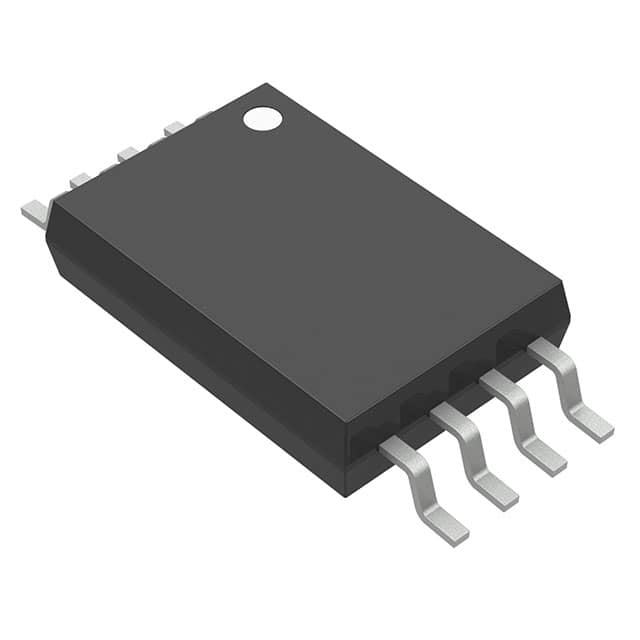
The Texas Instruments TIR1000PWR is a CMOS device designed to encode and decode bit data in conformance with the IrDA specification. This IC adds an Infrared (IR) port to a Universal Asynchronous Receiver Transmitter (UART), enabling serial infrared communication.
Key electrical specifications include an operating voltage range of 2.7V to 5.5V and support for data rates from 1200-bps to 115-kbps. The device operates within a temperature range of -40°C to 85°C. It is compatible with Infrared Data Association (IrDA™) and Hewlett Packard Serial Infrared (HPSIR) protocols.
The TIR1000PWR is available in an 8-terminal TSSOP package, suitable for surface mounting. A transceiver device is required to interface with the photo-sensitive diode and light-emitting diode, and a UART is needed for serial data line interfacing. This component decodes both negative and positive pulses, providing a simple interface with the UART.
| Qty | Low | High |
|---|---|---|
| 1+ | $0.81 | $0.81 |
Estimated market price range - modelled values for guidance only, not live distributor offers.
The TIR1000PWR operates from 2.7V to 5.5V.
The TIR1000PWR is available in an 8-TSSOP package.
The operating temperature range for the TIR1000PWR is -40°C to 85°C.
The TIR1000PWR supports UART protocols and is compatible with IrDA and HPSIR.
The TIR1000PWR supports data rates from 1200-bps to 115-kbps.