

| Distributor | Stock | Pricing | MOQ | PKG | Lead Time | Date Code | On Order Quantity | On Order Delivery | |
|---|---|---|---|---|---|---|---|---|---|
|
12,053 pcs
|
12053 pcs | On Request | 1 | On Request | On Request | On Request | On Request | On Request | |
|
1,874 pcs
|
1874 pcs | On Request | 1 | On Request | On Request | On Request | On Request | On Request | |
|
2 pcs
|
2 pcs | On Request | 1 | On Request | On Request | 22+ | On Request | On Request |
| Category | |
| Manufacturer Name | |
| Data Rate | |
| Mounting Type | |
| Number of Drivers | |
| Operating Temperature | |
| Protocol | |
| Receiver Hysteresis | |
| Supplier Device Package | |
| Supplier Package | |
| Type | |
| Voltage |
The TCAN332GDCNR is a 3.3-Volt CAN Transceiver from Texas Instruments, designed for robust communication in automotive and industrial applications. It supports CAN FD (Flexible Data Rate) and achieves signaling rates of up to 5 Mbps, ensuring high-speed data transmission.
This transceiver operates within a wide temperature range of -40°C to 125°C, making it suitable for demanding environments. It features a ±14V bus pin fault protection and a wide common mode range of ±12V, enhancing its reliability. The device is compatible with ISO 11898-2 standards and offers protection features such as ESD protection exceeding ±25kV (HBM) and ±12kV (IEC 61000-4-2).
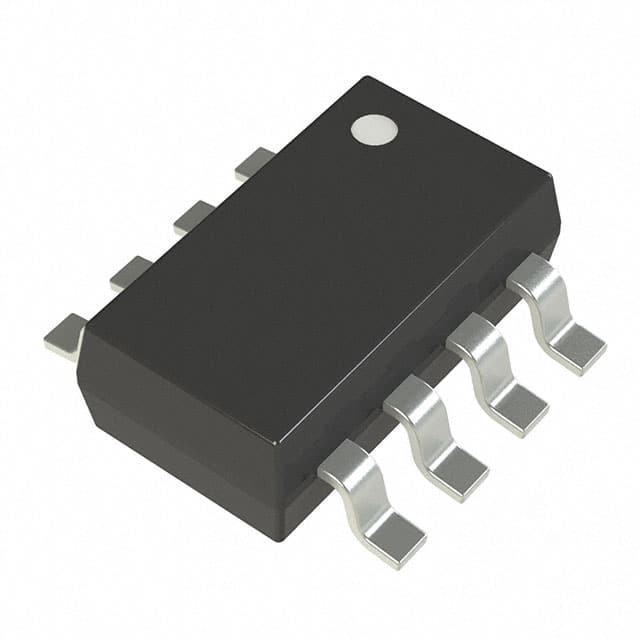
Available in a compact SOT-23-8 package, the TCAN332GDCNR is designed for surface mount applications. Its optimized behavior when unpowered ensures it presents a high impedance, preventing load on the operating bus. The device also provides power-up/down glitch-free operation and excellent EMC performance.
| Qty | Low | High |
|---|---|---|
| 1+ | $0.96 | $0.96 |
Estimated market price range - modelled values for guidance only, not live distributor offers.
The TCAN332GDCNR operates with a supply voltage between 3V and 3.6V.
The operating temperature range for this transceiver is -40°C to 125°C.
The TCAN332GDCNR is available in a SOT-23-8 package.
The TCAN332GDCNR supports CAN and CAN FD protocols.
The maximum signaling rate for this device is 5 Mbps.