

| Distributor | Stock | Pricing | MOQ | PKG | Lead Time | Date Code | On Order Quantity | On Order Delivery | |
|---|---|---|---|---|---|---|---|---|---|
|
2,500 pcs
|
2500 pcs | On Request | 1 | On Request | On Request | 04+ | On Request | On Request |
| Category | |
| Manufacturer Name | |
| Channel Type | |
| Current | |
| Delay Time | |
| Driven Configuration | |
| ESD Protection | |
| Gate Type | |
| Input Type | |
| Input Voltage | |
| Lead Spacing | |
| Logic Voltage | |
| Mounting Type | |
| Number of Drivers | |
| Operating Temperature | |
| Power Dissipation | |
| Rise | |
| Supplier Device Package | |
| Voltage |
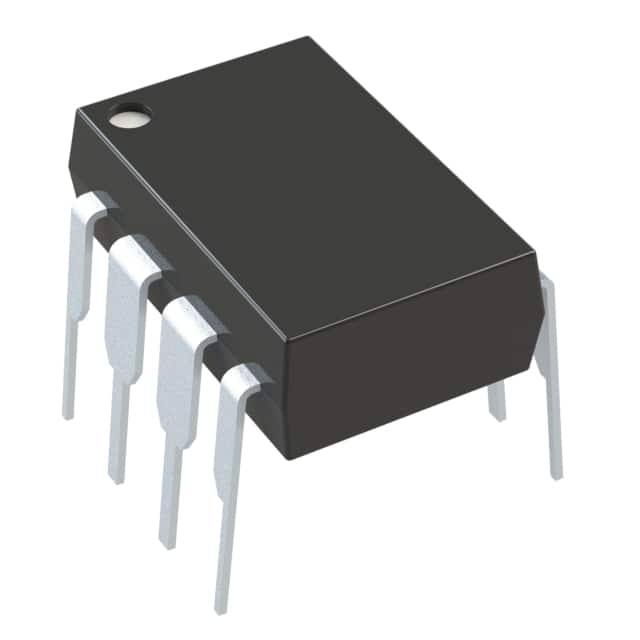
The Microchip TC4423CPA is a dual-output buffer and MOSFET driver designed for high-speed switching applications. It delivers a high peak output current of 3A and operates over a wide input supply voltage range of 4.5V to 18V.
Key features include a high capacitive load drive capability, easily charging 1800 pF in 25 ns, and short delay times of less than 40 ns typical. The device also provides matched rise and fall times, low output impedance (3.5 Ω typical), and latch-up protection, withstanding 1.5A reverse current. The inputs can be driven directly from TTL or CMOS logic and include 300 mV of built-in hysteresis for noise immunity.
This driver is suitable for applications such as switch mode power supplies, pulse transformer drives, and line drivers. It is available in a space-saving 8-pin PDIP package, designed for through-hole mounting.
The TC4423CPA is pin-compatible with other Microchip driver families, offering robustness for operation in demanding electrical environments.
| Qty | Low | High |
|---|---|---|
| 1+ | $2.01 | $2.01 |
Estimated market price range - modelled values for guidance only, not live distributor offers.
The typical output current is 3A.
The supply voltage range is 4.5V to 18V.
It is available in an 8-PDIP through-hole package.
The operating junction temperature range is 0°C to 150°C.
The rise time is 23ns and the fall time is 25ns.
Yes, it has 4 kV ESD protection.
The typical delay time is less than 40ns.