

| Distributor | Stock | Pricing | MOQ | PKG | Lead Time | Date Code | On Order Quantity | On Order Delivery | |
|---|---|---|---|---|---|---|---|---|---|
|
27 pcs
|
27 pcs | On Request | 1 | On Request | On Request | On Request | On Request | On Request | |
|
5 pcs
|
5 pcs | On Request | 1 | On Request | On Request | 927 | On Request | On Request |
| Category | |
| Manufacturer Name | |
| Circuit | |
| Independent Circuits | |
| Mounting Type | |
| Operating Temperature | |
| Supplier Device Package | |
| Supplier Package | |
| Type | |
| Voltage | |
| Voltage Supply Source |
The SY58018UMG from Microchip Technology is a precision, high-speed 2:1 differential multiplexer designed for demanding clock and data distribution applications. It is capable of handling clock frequencies up to 4 GHz and data rates up to 5 Gbps.
This multiplexer features guaranteed AC performance over temperature and voltage, with ultra-low jitter design. Its unique input termination architecture allows interfacing with various differential signals, including CML, PECL, and LVDS, without external level shifting or termination networks. The outputs provide an 800 mV LVPECL swing with fast rise and fall times under 110 ps.
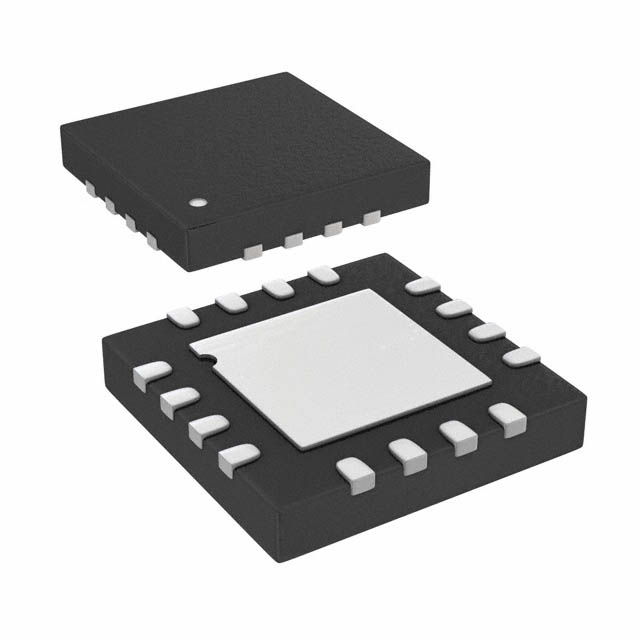
The SY58018UMG operates from a 2.5V ±5% or 3.3V ±10% power supply and is specified for the industrial temperature range of -40°C to +85°C. It is available in a compact 16-lead (3 mm x 3 mm) QFN package, suitable for surface mount applications.
Key applications include redundant clock distribution, SONET/SDH clock/data distribution, loopback functions, and Fibre Channel distribution.
| Qty | Low | High |
|---|---|---|
| 1+ | $1.27 | $1.27 |
Estimated market price range - modelled values for guidance only, not live distributor offers.
The maximum clock frequency for the SY58018UMG is greater than 4 GHz.
The SY58018UMG supports a data throughput of up to 5 Gbps.
The SY58018UMG operates in the industrial temperature range of -40°C to +85°C.
The SY58018UMG is available in a 16-QFN (3x3 mm) package.
The SY58018UMG accepts DC- and AC-coupled inputs including CML, PECL, and LVDS.