

| Distributor | Stock | Pricing | MOQ | PKG | Lead Time | Date Code | On Order Quantity | On Order Delivery | |
|---|---|---|---|---|---|---|---|---|---|
|
1,500 pcs
|
1500 pcs | On Request | 1 | On Request | On Request | 20+ | On Request | On Request | |
|
1,477 pcs
|
1477 pcs | On Request | 1 | On Request | On Request | On Request | On Request | On Request | |
|
195 pcs
|
195 pcs | On Request | 1 | On Request | On Request | On Request | On Request | On Request | |
| On Request | On Request | 1 | On Request | On Request | On Request | On Request | On Request |
| Category | |
| Manufacturer Name | |
| Connectivity | |
| Core Processor | |
| Core Size | |
| Data Converters | |
| EEPROM Size | |
| Frequency | |
| Interface | |
| Mounting Type | |
| Number of I | |
| Operating Temperature | |
| Oscillator Type | |
| Peripherals | |
| Program Memory Size | |
| Program Memory Type | |
| RAM Size | |
| Speed | |
| Storage Temperature | |
| Supplier Device Package | |
| Tape & Reel | |
| Voltage |
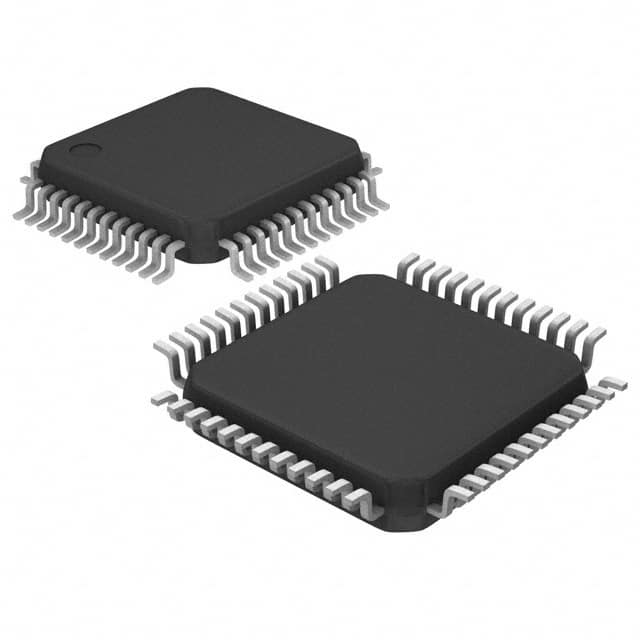
The STM32L051C6T6 microcontroller by STMicroelectronics is built around a 32-bit ARM Cortex-M0+ core operating at up to 32MHz. This device is designed for low-power embedded applications and features 32KB of Flash program memory and 8KB of RAM for code and data storage. It also includes a 2K x 8 EEPROM for additional non-volatile storage.
Key electrical specifications include a wide operating voltage range of 1.65V to 3.6V, 37 general-purpose I/O pins, and an internal oscillator. Connectivity options include I2C, IrDA, SPI, and UART/USART interfaces. For data conversion, it incorporates 10x12-bit ADCs.
The STM32L051C6T6 is housed in a 48LQFP package, suitable for various mounting requirements. Its combination of performance, low power consumption, and robust memory options makes it suitable for applications in consumer electronics, industrial automation, medical devices, and IoT.
Development is supported by STMicroelectronics' comprehensive tool suite, including STM32CubeMX and STM32CubeIDE, facilitating efficient design and debugging.