

| Distributor | Stock | Pricing | MOQ | PKG | Lead Time | Date Code | On Order Quantity | On Order Delivery | |
|---|---|---|---|---|---|---|---|---|---|
|
1,012 pcs
|
1012 pcs | On Request | 1 | On Request | On Request | On Request | On Request | On Request |
| Category | |
| Manufacturer Name | |
| Connectivity | |
| Core Processor | |
| Core Size | |
| Data Converters | |
| Lead Spacing | |
| Mounting Type | |
| Number of I | |
| Operating Temperature | |
| Oscillator Type | |
| Peripherals | |
| Program Memory Size | |
| Program Memory Type | |
| RAM Size | |
| Speed | |
| Supplier Device Package | |
| Voltage |
The STM32F205ZFT6 is a high-performance 32-bit microcontroller based on the ARM Cortex-M3 core. It operates at speeds up to 120MHz and provides 768KB of FLASH program memory and 132KB of RAM, making it suitable for demanding embedded applications.
This microcontroller includes a comprehensive set of peripherals, such as CANbus, I²C, SPI, UART/USART, and USB OTG, along with data converters (24x12-bit A/D, 2x12-bit D/A). It is designed for a wide operating temperature range of -40°C to 85°C and operates on a supply voltage between 1.8V and 3.6V.
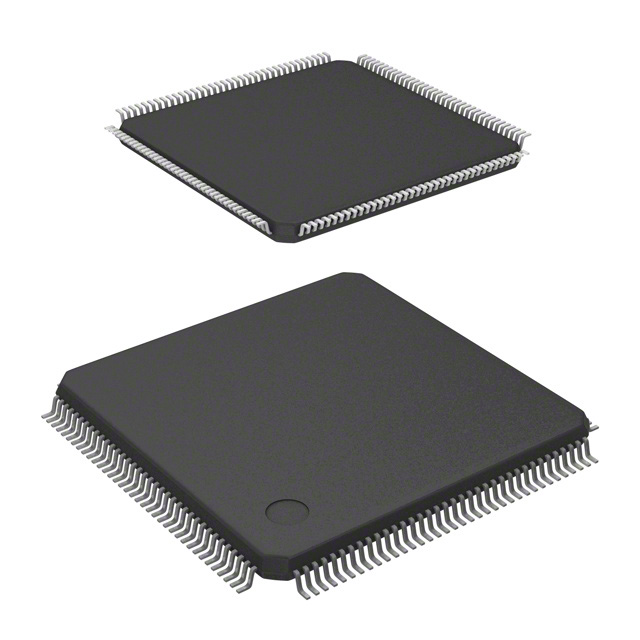
The STM32F205ZFT6 comes in a 144-LQFP package suitable for surface mounting. Its integrated peripherals include DMA, PWM, and WDT, supporting various control and communication tasks. The internal oscillator type simplifies system design.
This device is RoHS3 compliant and suitable for applications requiring robust processing capabilities and extensive connectivity options.
| Qty | Low | High |
|---|---|---|
| 1+ | $6.40 | $6.40 |
Estimated market price range - modelled values for guidance only, not live distributor offers.
The operating voltage for the STM32F205ZFT6 is between 1.8V and 3.6V.
The STM32F205ZFT6 operates in a temperature range of -40°C to 85°C.
The STM32F205ZFT6 is supplied in a 144-LQFP package.
The STM32F205ZFT6 is RoHS3 Compliant.
To configure the STM32F205ZFT6 for low power consumption, enable low power modes like sleep, stop, and standby. Disable unused peripherals such as timers and UARTs. Optimize clock configuration by using lower frequencies and the internal 16 MHz RC oscillator. Utilize DMA for data transfers to reduce CPU load.