

| Distributor | Stock | Pricing | MOQ | PKG | Lead Time | Date Code | On Order Quantity | On Order Delivery | |
|---|---|---|---|---|---|---|---|---|---|
|
10,000 pcs
|
10000 pcs | On Request | 1 | On Request | On Request | On Request | On Request | 2026-02-16 21:33:16 | |
|
8,000 pcs
|
8000 pcs | On Request | 1 | On Request | On Request | On Request | On Request | On Request | |
|
1,842 pcs
|
1842 pcs | On Request | 1 | On Request | On Request | On Request | On Request | On Request |
| Category | |
| Manufacturer Name | |
| Fault Protection | |
| Mounting Type | |
| Operating Temperature | |
| SVHC Present | |
| Supplier Device Package | |
| Voltage |
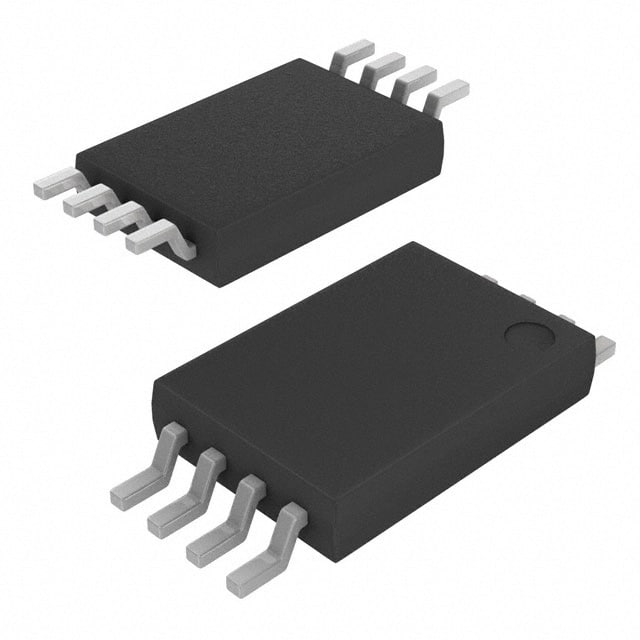
The SPV1040TTR from STMicroelectronics is an integrated circuit designed for battery charging, specifically in solar-powered applications. This IC is housed in an 8-TSSOP surface mount package, making it suitable for compact designs.
Key electrical specifications include a maximum supply voltage of 5.5V and fault protection against over current and over temperature conditions. The device operates across a wide temperature range of -40°C to 125°C (TJ).
This component is ideal for low-power energy harvesting systems, enabling the conversion of light energy into electrical power. Its design is well-suited for small solar-powered devices, wireless sensor nodes, and other IoT applications where efficient and reliable power management is crucial.
The SPV1040TTR is RoHS compliant and REACH unaffected, though its MSL rating is 3 (168 Hours).
| Qty | Low | High |
|---|---|---|
| 1+ | $1.29 | $1.29 |
Estimated market price range - modelled values for guidance only, not live distributor offers.
The SPV1040TTR has a maximum supply voltage of 5.5V.
The SPV1040TTR operates from -40°C to 125°C (TJ).
The SPV1040TTR includes Over Current and Over Temperature fault protection.
The SPV1040TTR is available in an 8-TSSOP package.
The SPV1040TTR is typically used in low-power energy harvesting applications, particularly for converting light energy into electrical power for small solar-powered devices, wireless sensor nodes, and other IoT applications.