

| Distributor | Stock | Pricing | MOQ | PKG | Lead Time | Date Code | On Order Quantity | On Order Delivery | |
|---|---|---|---|---|---|---|---|---|---|
|
2,000 pcs
|
2000 pcs | On Request | 1 | On Request | On Request | On Request | On Request | 2026-06-29 21:33:16 |
| Category | |
| Manufacturer Name | |
| AEC Qualified | |
| Automotive Grade | |
| Industrial Grade | |
| Medical Grade | |
| Military Grade | |
| Mounting Type | |
| Operating Temperature |
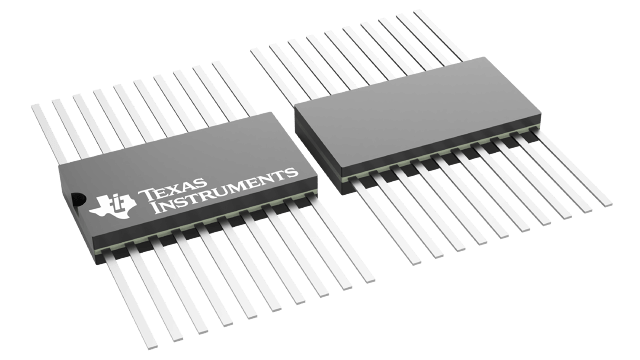
The SNJ54LVCH244AW from Texas Instruments is an octal buffer/line driver designed for military applications, operating from 1.65V to 3.6V. This device is organized as two independent 4-bit line drivers, each with a separate output-enable (OE) input. When OE is low, data passes from the A inputs to the Y outputs; when OE is high, the outputs enter a high-impedance state.
Key electrical characteristics include a maximum propagation delay of 5.9 ns at 3.3V. The inputs can accept voltages up to 5.5V, supporting mixed-mode signal operation with 3.3V VCC. It also features bus-hold circuitry on data inputs, eliminating the need for external pull-up or pull-down resistors, and supports partial-power-down mode operation via Ioff.
ESD protection exceeds JESD 22 standards, including 2000V for the Human-Body Model, 200V for the Machine Model, and 1000V for the Charged-Device Model. Latch-up performance exceeds 250mA per JESD 17. The device is rated for a wide operating temperature range of -55°C to 125°C.
Packaged in a 20-pin LCCC (Leadless Chip Carrier) with surface mount mounting type, the SNJ54LVCH244AW is suitable for demanding environments. Its features make it ideal for various digital interface and signal buffering applications in military and aerospace systems.
| Qty | Low | High |
|---|---|---|
| 1+ | $34.34 | $34.34 |
Estimated market price range - modelled values for guidance only, not live distributor offers.
The SNJ54LVCH244AW operates between 2.7 V and 3.6 V.
The device is packaged in a 20-LCCC surface-mount package.
The maximum propagation delay is 5.9 nanoseconds at 3.3 V.
It operates from -55°C to 125°C.
Yes, it has ESD protection of 2000 V for human-body model, 200 V for machine model, and 1000 V for charged-device model.