

| Distributor | Stock | Pricing | MOQ | PKG | Lead Time | Date Code | On Order Quantity | On Order Delivery | |
|---|---|---|---|---|---|---|---|---|---|
|
36,160 pcs
|
36160 pcs | On Request | 1 | On Request | On Request | On Request | On Request | On Request |
| Category | |
| Manufacturer Name | |
| Lead Spacing | |
| Mounting Type | |
| Number of Drivers | |
| Operating Temperature | |
| Power Consumption | |
| Protocol | |
| Supplier Device Package | |
| Tape & Reel | |
| Type | |
| Voltage |
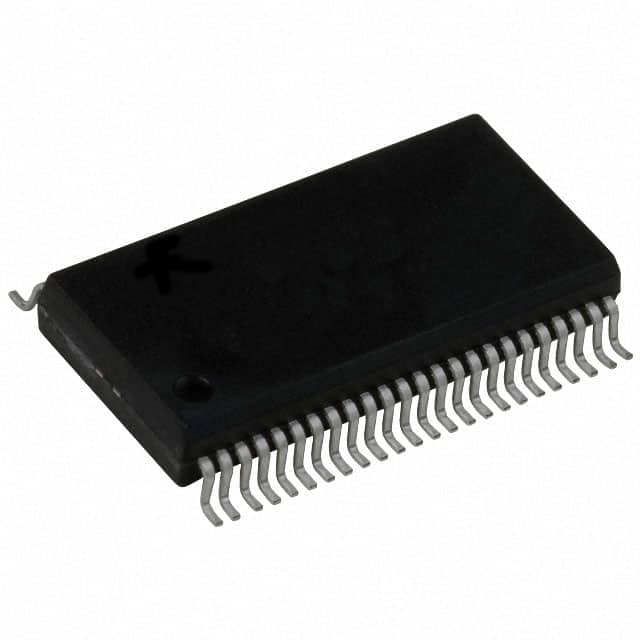
The SN75LVDS84ADGGRG4 from Texas Instruments is a FlatLink transmitter designed for efficient data transmission. It offers 21 data channels plus clock input with low-voltage TTL, and 3 data channels plus clock output with low-voltage differential signaling (LVDS) outputs.
This device supports 21:3 data channel compression, achieving throughputs of up to 196 million bytes per second. It operates from a single 3.3V supply with a wide phase-lock input frequency range of 31 MHz to 75 MHz. The SN75LVDS84ADGGRG4 is characterized for operation over an ambient free-air temperature range of 0°C to 70°C.
Packaged in a 48-TSSOP, this driver is designed for surface mount applications. It meets or exceeds the requirements of the ANSI EIA/TIA-644 Standard and is an improved replacement for older models like the SN75LVDS84 and NSC's DS90CF363A.
Key features include ultralow power consumption and the ability to transmit data with very low EMI, making it suitable for SVGA, XGA, or SXGA data transmission from controller to display.
| Qty | Low | High |
|---|---|---|
| 1+ | $3.43 | $3.43 |
Estimated market price range - modelled values for guidance only, not live distributor offers.
The SN75LVDS84ADGGRG4 operates from a 3V to 3.6V supply.
The SN75LVDS84ADGGRG4 is available in a 48-TSSOP package.
The operating temperature range for the SN75LVDS84ADGGRG4 is 0°C to 70°C.
The RoHS status is RoHS3 Compliant.
The MSL is Level-2-260C-1 YEAR.
The device supports 21:3 data channel compression.
The maximum throughput is up to 196 million bytes per second.