

| Distributor | Stock | Pricing | MOQ | PKG | Lead Time | Date Code | On Order Quantity | On Order Delivery | |
|---|---|---|---|---|---|---|---|---|---|
|
175 pcs
|
175 pcs | On Request | 1 | On Request | On Request | 9944 | On Request | On Request | |
|
21 pcs
|
21 pcs | On Request | 1 | On Request | On Request | On Request | On Request | On Request |
| Category | |
| Manufacturer Name | |
| Fault Protection | |
| Lead Spacing | |
| Mounting Type | |
| Number of Drivers | |
| Operating Temperature | |
| Protocol | |
| Supplier Device Package | |
| Supplier Package | |
| Supply Current | |
| Type | |
| Voltage |
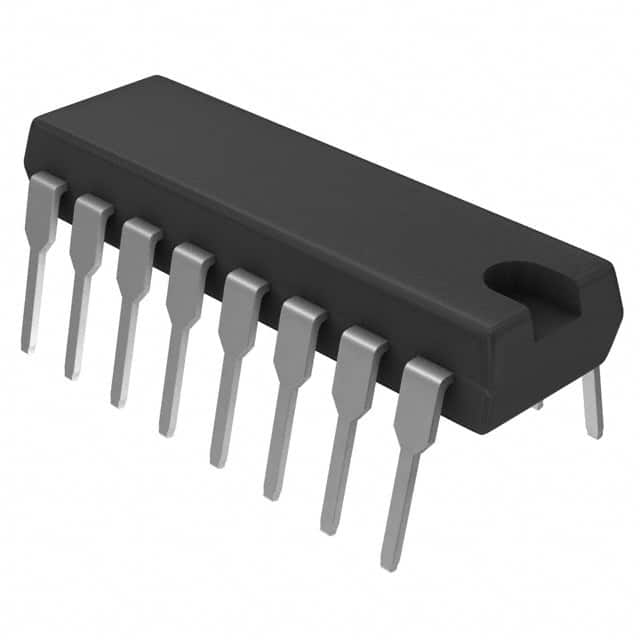
The SN75LBC172N from Texas Instruments is a monolithic quadruple differential line driver with three-state outputs, designed to meet EIA Standard RS-485. This device is optimized for balanced multipoint bus transmission, supporting data rates up to and exceeding 10 million bits per second.
Key electrical specifications include a signaling rate of 10 Mbps, a fault protection range of -10V to 15V, and a common-mode output voltage range of -7V to 12V. It operates within a temperature range of 0°C to 70°C and requires an operating voltage of 4.75V to 5.25V. The driver consumes low power, with a maximum supply current of 7000 µA.
Designed for robustness and low power consumption using LinBiCMOS technology, the SN75LBC172N offers positive- and negative-current limiting and thermal shutdown circuitry for protection against line fault conditions. It is suitable for party-line applications in noisy environments.
The component is available in a 16-PDIP package and is designed for through-hole mounting. It functions interchangeably with the SN75172.
| Qty | Low | High |
|---|---|---|
| 1+ | $5.57 | $5.57 |
Estimated market price range - modelled values for guidance only, not live distributor offers.
The maximum signaling rate for the SN75LBC172N is 10 Mbps.
The SN75LBC172N operates within a temperature range of 0°C to 70°C.
The SN75LBC172N is available in a 16-PDIP package.
The SN75LBC172N supports RS422 and RS485 protocols.
The common-mode output voltage range is -7V to 12V.