

| Distributor | Stock | Pricing | MOQ | PKG | Lead Time | Date Code | On Order Quantity | On Order Delivery | |
|---|---|---|---|---|---|---|---|---|---|
|
4 pcs
|
4 pcs | On Request | 1 | On Request | On Request | 05+/ | On Request | On Request |
| Category | |
| Manufacturer Name | |
| Duplex | |
| Fault Protection | |
| Mounting Type | |
| Operating Temperature Range | |
| Package / Case | |
| Standards | |
| Supply Current | |
| Supply Voltage |
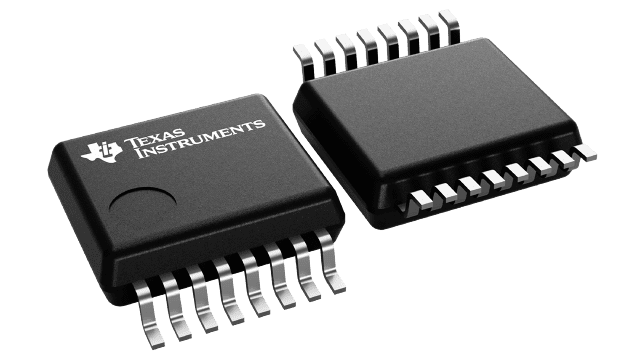
The SN75C1168 from Texas Instruments is an integrated circuit designed for balanced transmission lines, meeting TIA/EIA-422-B and ITU recommendation V.11 standards. This device functions as a dual differential driver and receiver, operating from a single 5V power supply.
Key electrical characteristics include a maximum signaling rate of 10 Mbps, a fault protection range of -11V to 14V, and a common-mode input voltage range of -7V to 7V. It supports up to 32 nodes on the bus and operates with a low supply current of 9mA maximum. The receiver features an input impedance of 17kΩ typical and a sensitivity of ±200mV.
Available in PDIP, TSSOP, SSOP, and SOP packages, the SN75C1168 is suitable for various industrial and commercial applications requiring robust differential signaling. Its glitch-free power-up and power-down protection ensures reliable operation during transitions. This component is an improved replacement for older parts like the MC34050 and MC34051.
5 V.
PDIP, TSSOP, SSOP, and SOP.
0 to 70 °C.
10 Mbps.
32 nodes.
Yes, it supports full-duplex communication.
TIA/EIA-422-B and ITU recommendation V.11.